Every organization takes risks. A start-up bets its savings on a product, a hospital relies on complex systems to keep patients safe, and a retailer depends on suppliers it cannot fully control. The difference between a business that survives uncertainty and one that is surprised by it is rarely luck. It is usually a repeatable way of thinking about what could go wrong, what could go right, and what to do next. That repeatable structure is what risk management frameworks provide.
This guide explains what risk management frameworks are, compares the most widely used options, and shows you how to choose and implement one. If you want the foundations first, start with our overview of the importance of a risk management approach in business, then return here to compare frameworks.
- What Is a Risk Management Framework?
- Why Risk Management Frameworks Matter
- Core Components Shared by Most Frameworks
- Key Risk Management Terms Worth Knowing
- The Main Risk Management Frameworks Compared
- How to Choose the Right Risk Management Framework
- How to Implement a Risk Management Framework: 8 Steps
- Qualitative vs Quantitative Risk Assessment
- Common Mistakes to Avoid
- Limitations of Risk Management Frameworks
- Frequently Asked Questions
- Conclusion: Choose a Framework You Will Actually Use
- References and Further Reading
What Is a Risk Management Framework?
A risk management framework is a structured set of principles, roles, policies, and activities that an organization uses to identify, assess, treat, monitor, and communicate risk consistently. It answers practical questions. Who owns a risk? How much risk is acceptable? How are risks scored and compared? When do leaders need to be told?
People often confuse a framework with related terms, so it helps to separate them:
- Framework: the overall architecture, including governance, responsibilities, risk appetite, and how risk management is built into decisions.
- Process: the repeatable sequence of steps, such as identifying, analyzing, and treating risks. Our guide to the risk management process and its key steps covers this in detail.
- Standard: a published document, such as ISO 31000, that describes recommended or required practice.
- Methodology or model: a specific technique for analyzing risk, such as a heat map or the FAIR model.
In short, the process is the engine, while the framework is the vehicle around it: the steering, the dashboard, and the rules of the road.

Why Risk Management Frameworks Matter
Without a framework, risk management tends to depend on individual judgment and memory. One manager tracks supplier risk in a spreadsheet, another discusses cyber threats informally, and nobody can compare the two. A framework fixes that in several ways:
- Consistency: every team describes and scores risk in the same way, so leaders can compare very different threats.
- Accountability: each risk has an owner, and responsibilities are written down.
- Better decisions: risk information reaches decision-makers before strategy, investment, and budget choices are made.
- Stakeholder confidence: boards, regulators, lenders, insurers, and customers gain evidence that risk is managed deliberately.
- Resilience: lessons from incidents and near misses feed back into improvement.
A framework also protects financial health. Weak visibility of cash, debts, and errors is itself a risk, which is why strong business financial reporting supports any risk program. A framework does not eliminate risk, and no standard can promise that losses will never occur. Its purpose is to make uncertainty visible and manageable.
Core Components Shared by Most Frameworks
Frameworks use different vocabulary, but nearly all of them contain the same building blocks.
Governance and leadership
Senior leaders set the tone, approve the risk policy, assign roles, and provide resources. Without visible sponsorship, risk management becomes a paperwork exercise.
Context and risk appetite
Before assessing risks, an organization needs to understand its objectives, environment, and the level of risk it is willing to accept. Risk appetite and tolerance statements turn vague caution into usable limits, such as a maximum acceptable loss or downtime.
Risk identification and assessment
Teams list risks from sources such as operations, finance, technology, suppliers, regulation, people, and reputation. Each risk is then analyzed for likelihood and impact and ranked so attention goes to the most significant exposures.
Risk treatment
Common responses include avoiding the activity, reducing the likelihood or impact, transferring risk through insurance or contracts, and accepting it knowingly. Each response should be justified against cost and benefit.
Monitoring, review, and reporting
Risks change as markets, technology, and regulation change. Indicators, audits, incident reviews, and regular reports keep the picture current and show whether controls work.
Communication and culture
People must feel able to raise concerns early. A strong risk culture encourages honest reporting, learning from mistakes, and informed risk-taking rather than blame.

Key Risk Management Terms Worth Knowing
A few terms appear in almost every framework, and using them precisely avoids confusion in meetings and reports.
- Inherent risk: the level of risk before any controls or treatments are applied.
- Residual risk: the risk that remains after controls and treatments are in place.
- Risk appetite: the broad amount and type of risk an organization is willing to pursue to achieve its objectives.
- Risk tolerance: the acceptable variation around a specific objective, often expressed as a measurable limit.
- Key risk indicator (KRI): a measurable signal, such as overdue security patches or late supplier deliveries, that warns a risk may be rising.
- Risk register: the central log that records each risk, its owner, its score, its controls, and its treatment status.
Agreeing on these definitions early helps teams from finance, operations, and technology speak the same language.
The Main Risk Management Frameworks Compared
There is no single best framework. The right choice depends on your sector, size, regulatory obligations, and the type of risk you most need to manage. These are the frameworks organizations meet most often.
ISO 31000:2018
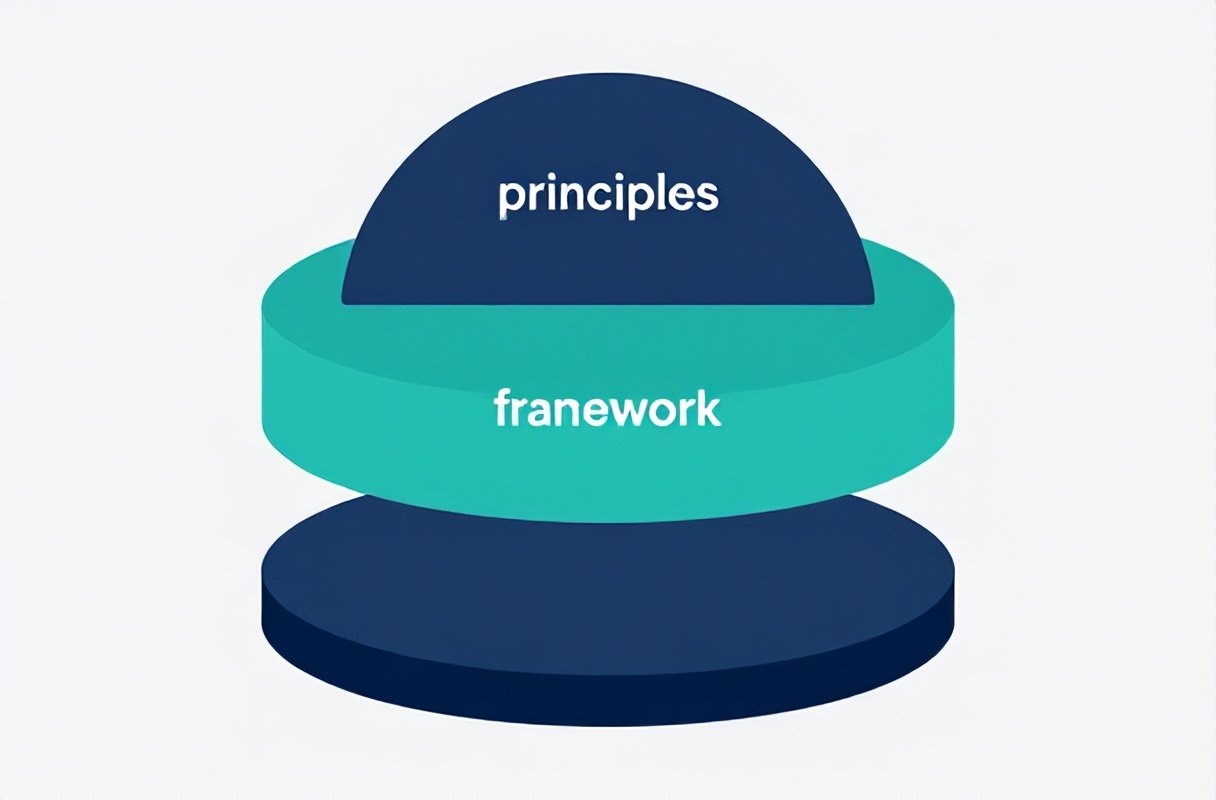
ISO 31000 is an international guideline for managing risk in any organization, regardless of size, sector, or type of risk. The current edition is the second, published in 2018. It is built on three connected elements: principles, a framework, and a process.
The standard sets out eight principles, including that risk management should be integrated, structured, and comprehensive; customized; inclusive; dynamic; based on the best available information; shaped by human and cultural factors; and continually improved. Its framework covers leadership and commitment, integration, design, implementation, evaluation, and improvement. The process runs through communication and consultation; scope, context, and criteria; risk assessment (identification, analysis, and evaluation); risk treatment; monitoring and review; and recording and reporting.
Because ISO 31000 provides guidance rather than a rigid checklist, it suits organizations that want a flexible, sector-neutral foundation. You can find a summary of its structure in the NC State ERM Initiative overview of ISO 31000.
COSO Enterprise Risk Management (ERM)
COSO’s Enterprise Risk Management framework links risk directly to strategy and performance. The 2017 update, titled Enterprise Risk Management: Integrating with Strategy and Performance, revised the original 2004 framework. It is organized into five interrelated components: governance and culture; strategy and objective-setting; performance; review and revision; and information, communication, and reporting. Across these components sit 20 principles.
COSO ERM is popular among larger companies, boards, finance teams, and auditors, particularly in the United States. It is especially useful when you want to show how risk affects strategic choices. If that link between direction and risk interests you, our comparison of corporate strategy and business strategy explains how different layers of strategy are set. COSO publishes the framework through its bookstore partners, and the Institute of Internal Auditors listing describes the publication.

NIST Risk Management Framework (RMF)
The NIST RMF, described in NIST Special Publication 800-37 Revision 2, is a seven-step process for managing security and privacy risk throughout the life of an information system. The steps are prepare, categorize, select, implement, assess, authorize, and monitor. The Prepare step was added in Revision 2 to emphasize groundwork before system-level work begins.
The RMF is closely associated with US federal agencies and their contractors, where systems must be authorized to operate. It works alongside the control catalogue in NIST SP 800-53, which supplies the controls teams select and tailor. It can also benefit private organizations that need a disciplined approach to system security. NIST describes the approach on its Risk Management Framework project page.
NIST Cybersecurity Framework (CSF) 2.0
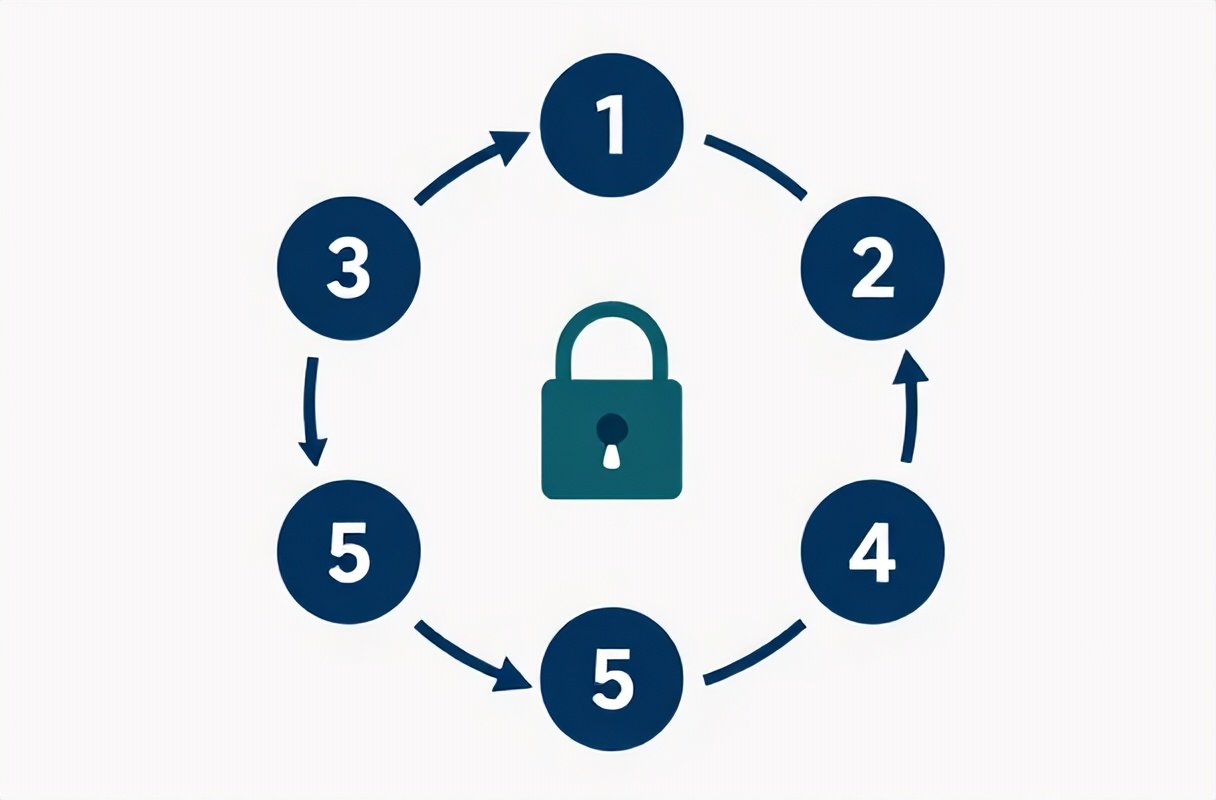
The NIST Cybersecurity Framework is a voluntary framework for managing cybersecurity risk. NIST released version 2.0 on 26 February 2024, widening its scope beyond critical infrastructure to organizations of any size or sector. Its core is now organized around six functions: govern, identify, protect, detect, respond, and recover. Govern is the newest, and it focuses on strategy, roles, policy, and oversight.
CSF 2.0 is outcome-based rather than prescriptive, which makes it a practical way for small and mid-sized businesses to talk about cyber risk with executives, suppliers, and insurers. You can read NIST’s announcement in its CSF 2.0 release news. Businesses exploring emerging technology should also weigh the security risks involved, as our guide to blockchain in decentralized business ecosystems discusses.
NIST AI Risk Management Framework
As organizations adopt artificial intelligence, many look to the NIST AI Risk Management Framework, published as AI RMF 1.0 on 26 January 2023. It is voluntary and built around four functions: Govern, Map, Measure, and Manage. Govern applies across the whole lifecycle, while the other three are used in specific AI contexts. NIST has indicated that a revised version is in progress, so check its AI RMF resource page for the current edition.
FAIR (Factor Analysis of Information Risk)
FAIR is a quantitative model rather than a complete management framework. It defines risk as the probable frequency and probable magnitude of future loss, then breaks both parts into factors that can be estimated. In simple terms, risk equals loss event frequency multiplied by loss magnitude, expressed in money. The Open Group publishes it as the Open FAIR standard, and the FAIR Institute supports the practitioner community.
FAIR is typically used inside broader frameworks such as NIST CSF or ISO-based programmes to put a financial figure on top scenarios. That helps leaders compare a cyber risk with, say, an equipment failure using the same currency. Details appear in the FAIR Model standard artifact.
Quick comparison table
| Framework | Main focus | Best suited to | Structure |
|---|---|---|---|
| ISO 31000:2018 | General risk of any kind | Any organisation wanting flexible guidance | Principles, framework, process |
| COSO ERM (2017) | Enterprise risk tied to strategy | Boards, finance, listed or larger firms | 5 components, 20 principles |
| NIST RMF | System security and privacy risk | US federal agencies and contractors | 7 steps |
| NIST CSF 2.0 | Cybersecurity risk | Organisations of any size | 6 functions |
| NIST AI RMF 1.0 | AI system risk | Teams building or using AI | 4 functions |
| FAIR | Quantifying risk in money | Security and risk teams needing numbers | Frequency and magnitude factors |
How to Choose the Right Risk Management Framework
Start with your needs rather than with the most famous name. Ask these questions:
- What are you required to follow? Contracts, regulators, or customers may already specify a framework. A federal contractor will almost certainly use the NIST RMF.
- What type of risk matters most? Broad business risk points toward ISO 31000 or COSO ERM. Cyber risk points toward NIST CSF. AI projects point toward the AI RMF.
- How mature is your organisation? A small team may need a lightweight start, while a large enterprise may need formal governance and board reporting.
- Do you need numbers? If leaders want financial estimates, add a quantitative method such as FAIR.
- How much capacity do you have? A framework that nobody can maintain is worse than a simple one that is used.
Many organisations combine frameworks, and that is perfectly acceptable. A typical pattern uses ISO 31000 or COSO ERM for the enterprise-wide structure, NIST CSF for cyber risk, and FAIR to quantify the biggest exposures.
Matching frameworks to real situations
Consider three examples. A regional accounting firm wants a simple, credible structure for client data, supplier, and staffing risks. It might adopt ISO 31000 logic for its register and use NIST CSF 2.0 to organise its cybersecurity controls. A software vendor preparing a machine-learning product might use the NIST AI RMF to document how it maps, measures, and manages model risk, while following CSF 2.0 for its infrastructure. A listed manufacturer with a board that demands strategic risk reporting might choose COSO ERM, then apply FAIR to quantify its largest cyber and operational scenarios. In each case, the framework follows the problem, not the other way round.
A note for small businesses
You do not need an enterprise-sized programme. A small company can adopt ISO 31000’s logic with a simple risk register, a short risk policy, and a quarterly review. Pairing that with sound planning, such as the ideas in our guide to small business growth strategies, helps you grow without taking unexamined risks.
How to Implement a Risk Management Framework: 8 Steps
Step 1: Secure leadership commitment
Obtain a named executive sponsor and agree the purpose, scope, and resources. Write a short risk policy that states principles and responsibilities.
Step 2: Define scope and context
Decide which business units, projects, and risk types are in scope. Document objectives, stakeholders, regulations, and external factors that shape risk.
Step 3: Set risk appetite and criteria
Agree on what level of loss is tolerable, then define scoring scales for likelihood and impact so everyone rates risks consistently.
Step 4: Identify risks
Run workshops, interviews, process reviews, and incident analysis. Capture each risk in a register with a clear description, cause, and consequence.
Step 5: Analyse and evaluate
Score likelihood and impact, consider existing controls, and rank risks. Compare results against your appetite to decide which ones need action.
Step 6: Treat risks
Choose a response for each priority risk, assign an owner and deadline, and estimate cost. Record the residual risk that remains after treatment.
Step 7: Monitor and report
Track key risk indicators, control tests, and incidents. Give leaders concise reports and escalate risks that exceed tolerance. Connecting this work to your growth planning, including a solid business development strategy plan, keeps risk and ambition aligned.
Step 8: Review and improve
Hold regular reviews, learn from incidents, update the framework when your business or environment changes, and retire controls that no longer add value.
Qualitative vs Quantitative Risk Assessment
Most programmes start qualitatively. Teams rate likelihood and impact as low, medium, or high, then plot results on a risk matrix, often called a heat map. This is quick, accessible, and good for broad screening.
Quantitative methods use numbers, such as expected annual loss or probability distributions. They take more data and skill, but they support better budgeting decisions, especially for high-value risks. Neither approach is superior in every case. A practical path is to screen everything qualitatively, then quantify the handful of risks that could genuinely threaten the organisation. Liquidity is a good candidate, as our explanation of cash flow versus profit shows how a business can look profitable and still run short of money.
Common Mistakes to Avoid
- Treating the framework as paperwork. A register that is never discussed does not reduce risk.
- Copying a framework without tailoring it. Adapt scales, terms, and reporting to your organisation.
- Ignoring culture. If people fear blame, bad news arrives late.
- Focusing only on threats. Good frameworks also consider opportunity and the risk of missing it.
- Setting it and forgetting it. Context changes, so reviews must be scheduled.
- Unclear ownership. A risk that belongs to everyone belongs to no one.
- False precision. Scores based on guesswork can look more reliable than they are.
For an industry example, see how a regulated biopharmaceutical business approaches its exposures in our article on Celgene risk management strategies.
Limitations of Risk Management Frameworks
Frameworks are valuable, but they have limits. They cannot predict rare, unprecedented events, and a well-documented programme can still miss a threat nobody imagined. Scoring systems depend on human judgement and available data, so they can be biased or outdated. Compliance with a framework also does not guarantee good outcomes, because a company can follow every step on paper while its culture ignores warning signs. Treat a framework as a disciplined aid to judgement, supported by scenario planning, challenge from independent reviewers, and a willingness to act when indicators change.
Frequently Asked Questions
1. What are the main risk management frameworks?
The most widely used include ISO 31000, COSO ERM, the NIST Risk Management Framework, the NIST Cybersecurity Framework 2.0, the NIST AI Risk Management Framework, and the FAIR model for quantifying risk. Which one fits depends on your sector and risk type.
2. What is the difference between ISO 31000 and COSO ERM?
ISO 31000 is a sector-neutral guideline built on principles, a framework, and a process. COSO ERM is organised into five components and 20 principles, and it places particular emphasis on linking risk with strategy and performance. Many organisations draw on both.
3. Is ISO 31000 a certification?
ISO 31000 provides guidelines rather than requirements, so organisations use it as guidance instead of certifying against it. Certification schemes exist for other management system standards.
4. Which framework is best for a small business?
A lightweight approach based on ISO 31000 principles is usually enough: a risk register, defined owners, simple scoring, and regular reviews. Add NIST CSF 2.0 if cyber risk is significant.
5. How often should a risk framework be reviewed?
Review the framework at least annually, and review the risk register more often, such as quarterly. Update immediately after major incidents, acquisitions, regulatory changes, or strategic shifts.
Conclusion: Choose a Framework You Will Actually Use
Risk management frameworks give structure to uncertainty. ISO 31000 offers flexible guidance, COSO ERM ties risk to strategy, the NIST frameworks address security, privacy, and AI, and FAIR puts a price on loss. The best framework is the one that fits your obligations, your risks, and your capacity to maintain it.
Start small, assign clear ownership, review often, and improve as you learn. Combine frameworks where it makes sense, and keep the focus on better decisions rather than perfect documentation. For further reading, revisit our guides on the risk management process and the risk management approach. This article is general information and not legal, financial, or professional compliance advice, so consult qualified advisers for your circumstances.
References and Further Reading
- NC State ERM Initiative: ISO’s Risk Management Framework — summary of ISO 31000:2018 principles, framework, and process.
- NC State ERM Initiative: COSO’s ERM Framework — overview of the five components and 20 principles.
- NIST CSRC: Risk Management Framework — the seven-step RMF and SP 800-37.
- NIST: Release of Cybersecurity Framework 2.0 — announcement of the six-function CSF 2.0.
- NIST AI Resource Center: AI RMF 1.0 — Govern, Map, Measure, and Manage functions.
- FAIR Institute: FAIR Model Standard v3.0 — definition of risk, loss event frequency, and loss magnitude.
- The IIA: COSO Enterprise Risk Management publication — description of the 2017 framework.