Google E-E-A-T in 2026 is less about adding a few trust badges to a website and more about proving that your content deserves to be trusted. If you publish blog posts, product reviews, tutorials, or business advice, readers should be able to understand who created the content, what experience supports it, how claims were checked, and why your site is qualified to cover the subject.
Google’s guidance has not introduced a magic E-E-A-T score that website owners can switch on. Instead, its ranking systems aim to surface helpful, reliable, people-first content. E-E-A-T—Experience, Expertise, Authoritativeness, and Trustworthiness—is a useful way to assess whether a page and the website behind it deserve confidence. Trust is the central element, and the other three qualities help support it.
This guide explains what E-E-A-T means in 2026, which practices matter most, how AI-assisted content fits into the picture, and how to turn the concept into a practical SEO workflow.

- What Is Google E-E-A-T?
- What Has Changed for E-E-A-T in 2026?
- 1. Demonstrate First-Hand Experience
- 2. Make Expertise Visible and Relevant
- 3. Build Authority Through Consistent, Useful Coverage
- 4. Treat Trustworthiness as the Foundation
- 5. Create Helpful Content, Not Search-Engine-First Content
- 6. Use AI Responsibly in Your Content Workflow
- 7. Strengthen Author Pages and Editorial Transparency
- 8. Improve On-Page SEO Without Over-Optimizing
- 9. Make Reviews and Case Studies Verifiable
- 10. Measure Progress With the Right Signals
- 11. A Practical E-E-A-T Checklist for 2026
- Common E-E-A-T Mistakes to Avoid
- Frequently Asked Questions About E-E-A-T
- Conclusion: Make Trust Visible Through the Work
- Official Sources and Further Reading
What Is Google E-E-A-T?
E-E-A-T stands for Experience, Expertise, Authoritativeness, and Trustworthiness. Google discusses these qualities in its Search Quality Rater Guidelines and its guidance on creating helpful, reliable, people-first content. They help people assess content quality, but E-E-A-T itself is not a single, direct ranking factor or a score displayed in Google Search Console.
- Experience: First-hand involvement with the subject, such as using a tool, testing a product, completing a process, or documenting a real project.
- Expertise: Relevant knowledge and skill that allow the creator to explain a subject accurately and in sufficient depth.
- Authoritativeness: Recognition of the creator, publication, or website as a useful and credible source within a subject area.
- Trustworthiness: Accuracy, transparency, honest representation, secure and usable pages, and clear accountability when something goes wrong.
These qualities are not equally necessary in every situation. A personal account of learning a new blogging tool may be strongest because it demonstrates experience. A guide to a complex medical issue needs reliable expert knowledge and careful sourcing. A product review should show how the product was tested rather than merely repeat its sales page.
What Has Changed for E-E-A-T in 2026?
The most useful 2026 approach is to avoid treating E-E-A-T as a new algorithm trick. The fundamentals remain consistent: create content for people, demonstrate real knowledge, be accurate, and make the source of the information clear. Google’s current documentation also emphasizes unique, non-commodity content for its generative AI search experiences. The practical implication is straightforward: pages that merely restate common information have less distinctive value than pages that include original analysis, useful examples, first-hand evidence, or a genuinely helpful tool.
Three themes deserve particular attention:
- Evidence beats empty claims. Saying “we are experts” is weaker than showing a real process, transparent methodology, original screenshots, relevant qualifications, or examples that readers can verify.
- AI assistance does not replace editorial responsibility. AI can help with research, structure, and drafting, but publishers still need to verify claims, add meaningful value, and avoid publishing large volumes of unoriginal pages.
- Trust is a site-wide commitment. A strong article can be undermined by a misleading author bio, hidden commercial relationships, broken contact information, exaggerated promises, or a website that makes accountability difficult.
These are not secret ranking factors newly announced for 2026. They are practical ways to apply Google’s published people-first and spam-policy guidance to modern content workflows.
1. Demonstrate First-Hand Experience
Experience is the extra “E” that distinguishes E-E-A-T from the earlier E-A-T concept. It asks whether the creator has direct involvement with the topic when first-hand involvement would help the reader. Experience is especially valuable in reviews, tutorials, case studies, comparisons, and practical advice.
How to show experience credibly
- Include original screenshots, photos, recordings, or annotated examples from the process.
- Explain what you tried, what happened, what failed, and what you changed.
- Describe the conditions of a test: the version used, timeframe, sample size, and relevant limitations.
- Share concrete outcomes only when you have evidence to support them.
- Separate personal observations from general facts and from your opinion.
For example, an article about keyword research is more useful when it walks readers through a real query, explains why certain keywords were rejected, and shows how search intent affected the final choice. A generic list of “best keyword research tips” offers less distinctive value if readers can find the same list everywhere.
Never invent first-hand experience. If you have not tested a product, do not write “I tested it for 30 days.” If you are summarizing official documentation, say so and link to the original source. Honest limitations strengthen credibility more than fabricated anecdotes.

2. Make Expertise Visible and Relevant
Expertise means more than adding the word “expert” to an author profile. It is reflected in the accuracy, depth, judgment, and clarity of the content. The level of expertise needed depends on the subject. A beginner-friendly blogging tutorial may be written by a knowledgeable practitioner; advice about health, legal rights, financial decisions, or safety calls for greater care and, where appropriate, qualified professional review.
Practical ways to demonstrate expertise
- Publish a complete author bio that describes relevant experience and qualifications accurately.
- Link to a useful author page or professional profile where readers can verify background information.
- Explain important terminology and assumptions instead of hiding behind jargon.
- Use reliable primary sources for claims that depend on official policy, data, or technical documentation.
- Keep important pages updated when the underlying facts change, and explain substantial updates honestly.
- Invite a qualified reviewer when the subject warrants specialist knowledge, and identify what the reviewer actually reviewed.
Do not invent credentials, awards, clients, certifications, or expert reviewers. Do not use a generic “medically reviewed” or “expert approved” label unless the review happened and the person’s role is accurately described. A transparent account of the creator’s real experience is more trustworthy than inflated credentials.
3. Build Authority Through Consistent, Useful Coverage
Authoritativeness is the extent to which people can reasonably recognize a person, publication, or website as a credible source on a topic. It is not created by publishing hundreds of articles or repeating a keyword across every page. Authority develops when a site consistently answers a defined audience’s questions and contributes information that is useful enough to reference, share, or return to.
Build topical depth without producing repetitive content
Choose a clear audience and a set of related problems you can genuinely help solve. For a site about blogging and digital marketing, a coherent content cluster might include keyword research, search intent, on-page SEO, content updating, analytics, and trust-building. Each article should have a distinct purpose. If two pages target the same intent and offer almost identical advice, improve or consolidate them rather than creating another near-duplicate.
Use internal links to connect related pages naturally. A tutorial about keyword research can link to a deeper guide on SEO content writing; a case study can link to the method that produced its results. Use descriptive anchor text that tells readers what they will find. Internal links help people navigate your site and help search engines discover relationships between pages, but they do not magically establish authority by themselves.
Earn references rather than manufacturing them.
Other relevant websites may cite your work when it includes original data, a useful framework, a well-documented experiment, or a clear explanation of a difficult subject. You can encourage discovery by sharing research with relevant communities and making your material easy to reference. Avoid paid link schemes, automated link exchanges, or low-quality guest posts designed primarily to manipulate rankings. A link is most valuable to users when it genuinely helps them verify or expand on a point.
Authority is not a badge you can add to a page. It is a reputation that grows from consistent usefulness, reliable publishing, and recognition earned over time.

4. Treat Trustworthiness as the Foundation
Google’s guidance identifies trust as the most important part of E-E-A-T. Readers should be able to understand who is responsible for a page, whether its claims are supported, what commercial interests may exist, and how to contact the publisher. Trust is shaped by the article itself and by the broader website experience.
Trust signals worth reviewing
- Clear authorship: Show an accurate byline when appropriate and link it to meaningful author information.
- Transparent ownership: Maintain useful About and Contact pages that explain who runs the site and how to get in touch.
- Editorial standards: Explain how content is researched, fact-checked, reviewed, and updated when that information helps readers.
- Honest monetization: Disclose affiliate links, sponsorships, and other material commercial relationships clearly and close to the relevant content.
- Accurate claims: Link to sources, distinguish facts from opinion, and correct significant errors.
- Safe browsing: Use HTTPS, keep the site maintained, and avoid deceptive pop-ups, fake buttons, or confusing navigation.
- Realistic promises: Avoid claims such as “guaranteed first place on Google” when no one can guarantee a search ranking.
Trust is damaged by fabricated reviews, fake testimonials, misleading author profiles, undisclosed incentives, copied material, and exaggerated results. If you make a mistake, correct it clearly rather than silently presenting the old claim as if it had always been accurate.
5. Create Helpful Content, Not Search-Engine-First Content
Google’s people-first guidance encourages publishers to ask whether a page has an intended audience, demonstrates depth, satisfies the reader’s goal, and leaves the reader feeling that the task is complete. It also warns against producing content mainly to attract search visits, publishing across unrelated topics without a clear purpose, or summarizing other sources without adding value.
Before writing, answer these questions:
- Who is this page for, and what problem are they trying to solve?
- What will readers know or be able to do after reading it?
- What original example, explanation, research, or perspective can we contribute?
- Which claims need authoritative sources or specialist review?
- What limitations or exceptions should readers understand?
- Does the page answer the likely follow-up questions without burying the answer in filler?
Do not write to a word count because you believe Google prefers a particular length. Use enough detail to solve the problem, but no more than the reader needs. A focused 900-word guide can be more helpful than a repetitive 3,000-word article. Long-form content is justified when the topic genuinely requires breadth, examples, and nuance.

6. Use AI Responsibly in Your Content Workflow
AI-assisted content can be useful for brainstorming, outlining, organizing notes, simplifying complex material, and identifying questions a draft should answer. Google’s guidance focuses on the quality and purpose of the content rather than imposing a blanket ban on AI-generated text. However, generating many pages with little original value primarily to manipulate rankings may fall under scaled content abuse, regardless of whether the pages were written by a person or a machine.
A responsible AI-assisted workflow
- Start with a real reader need. Confirm that the topic belongs to your site and serves your audience.
- Research primary sources. Use official documentation, original datasets, and credible first-hand material where available.
- Use AI for assistance, not authority. Treat generated claims, statistics, citations, and quotations as unverified until checked.
- Add original editorial value. Include your own analysis, practical examples, tested steps, expert input, or useful synthesis.
- Fact-check and edit. Remove unsupported claims, repetition, generic filler, and any invented experience.
- Disclose the process when useful. If readers would reasonably want to know how a review, image, or analysis was produced, explain the relevant process clearly.
- Review before publication. A human editor remains responsible for accuracy, originality, fairness, and the page’s usefulness.
There is no universal requirement to add an AI disclosure to every page simply because a tool helped with drafting. Consider whether disclosure would meaningfully help readers understand how the content was produced. Never use an AI-generated author identity or fictional biography to imply real expertise.
7. Strengthen Author Pages and Editorial Transparency
An author page should help readers assess the person behind the content. Include the author’s real name or clearly identified publishing identity, relevant experience, subject areas, and links to published work. Include credentials only when accurate and relevant. If multiple contributors or reviewers materially shaped a piece, identify their roles honestly.
Google supports structured data types such as Article and ProfilePage for eligible uses. Article markup can help Google understand details such as a headline, author, image, and dates. ProfilePage markup can describe an appropriate person or organization profile. Structured data should match visible page content and follow Google’s guidelines; it does not guarantee a rich result or higher rankings.
For most WordPress publishers, the practical sequence is to maintain useful author pages, ensure the theme and SEO plugin output accurate article metadata, and validate structured data where appropriate. Avoid adding schema properties that claim credentials, ratings, or reviews that do not exist.
8. Improve On-Page SEO Without Over-Optimizing
Good on-page SEO helps people and search engines understand the page. It complements trustworthy content; it cannot make weak content genuinely useful.
- Title: Use a clear, accurate title that reflects the main question. Avoid sensational promises.
- Headings: Organize sections in a logical hierarchy and use headings to describe what each section covers.
- Search intent: Address the actual task behind the query, not just the exact keyword phrase.
- Internal links: Connect to relevant supporting guides where they add context.
- External sources: Cite official documentation and reliable evidence for important factual claims.
- Images: Use relevant original visuals where they help explain the subject. Write useful alt text for meaningful images and avoid keyword stuffing.
- Page experience: Make the page mobile-friendly, secure, readable, and easy to navigate without intrusive interruptions.
- Metadata: Write a useful meta description that accurately summarizes the page, while remembering that Google may choose a different search snippet.
For more on practical SEO improvements, see our guides to keyword research in 2026, AI in digital marketing, and building a brand that people and AI systems can trust. These resources cover related topics; use the links where they genuinely support the reader’s next step.
9. Make Reviews and Case Studies Verifiable
Reviews and case studies are especially dependent on evidence. A useful review explains what was evaluated, why those criteria matter, what the reviewer observed, and who is likely to benefit from the product or service. If the review includes comparisons, make the comparison fair and explain meaningful differences rather than declaring a universal winner.
For a product review, disclose whether you bought the product, received access from a company, or have an affiliate relationship. Explain the test setup and limitations. Use your own screenshots or photos where possible. Do not invent hands-on testing, copy manufacturer descriptions as if they were observations, or publish star ratings that are not based on real user feedback.
A case study should define the starting point, actions taken, measurement period, and outcome. If several factors changed at once, do not claim that one SEO change caused all the results. Include relevant context and uncertainty. A modest but transparent case study is more credible than an impressive number without methodology.
10. Measure Progress With the Right Signals
There is no E-E-A-T score in Google Search Console that tells you whether your website has passed. Measure the results of your content strategy and use those findings to improve pages, not to manufacture a false sense of certainty.
- Search Console: Monitor impressions, clicks, queries, CTR, indexing, and changes to the pages that matter.
- Analytics: Review whether visitors engage with the page, navigate to relevant resources, or complete the action the content was meant to support.
- Content audits: Identify outdated claims, missing sources, duplicate intent, thin sections, and pages that no longer satisfy readers.
- Editorial feedback: Ask knowledgeable readers to identify unclear explanations and unsupported conclusions.
- External recognition: Track relevant citations, mentions, and links as evidence that useful work is reaching its audience, not as a guaranteed ranking shortcut.
When organic performance declines, avoid assuming that an E-E-A-T weakness is the cause. Check the affected queries and pages, technical indexing, intent alignment, SERP changes, and the quality of competing results. Google recommends assessing sustained changes carefully rather than making drastic edits based on small fluctuations.

11. A Practical E-E-A-T Checklist for 2026
Use this checklist before publishing or refreshing an important article.
- Does the article solve a clear problem for a defined audience?
- Is the author or publisher clearly identified where readers would expect it?
- Are relevant experience and qualifications represented accurately?
- Does the page include original analysis, examples, evidence, or useful detail beyond a generic summary?
- Have important claims, statistics, quotes, and links been verified?
- Are limitations, uncertainties, and commercial relationships disclosed where relevant?
- Does the page avoid fabricated testimonials, fake expertise, and unsupported guarantees?
- Are internal links relevant and useful rather than forced?
- Does the page work well on mobile and provide a safe, readable experience?
- Are dates, screenshots, software details, and policy references current when freshness matters?
- Has the content been edited for accuracy, clarity, originality, and repetition?
- Would a reader feel confident using this page without immediately needing to search for a better explanation?
Not every item applies to every page. Use judgment based on the topic, the risks involved, and what readers need in order to trust the information.
Common E-E-A-T Mistakes to Avoid
Chasing a score: E-E-A-T is not a single metric you can optimize through a plugin. Use the framework to improve real quality and trust.
Adding generic author bios: A paragraph that says “experienced writer passionate about digital marketing” may provide little useful evidence. Add accurate, relevant detail.
Publishing AI drafts without review: Fluent writing can still contain false claims, outdated details, and invented citations. Verify before publishing.
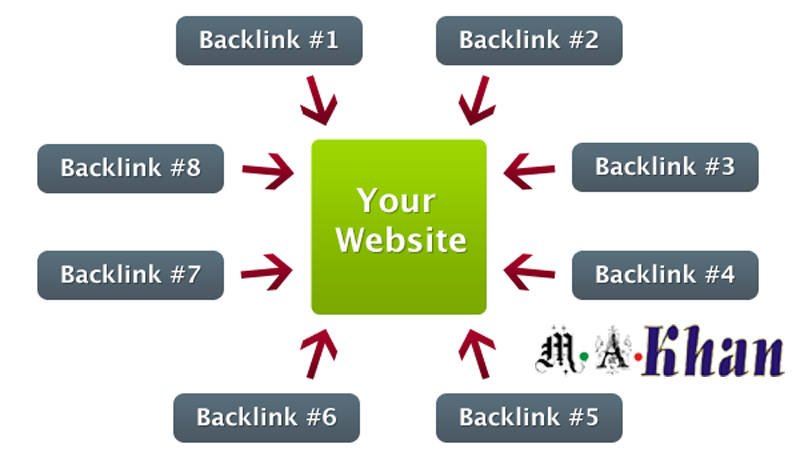
Confusing backlinks with trust: Links can help discovery and may contribute to how pages are understood, but paid or manipulative link schemes are not a substitute for a strong reputation.
Updating dates without meaningful changes: Change a publication or modification date only when it accurately reflects the page’s history. Refresh the content itself when facts, examples, or guidance have changed.
Overloading pages with badges and schema: Trust is earned through honest content and clear accountability. Markup should describe what is really on the page, not create an artificial appearance of authority.
Frequently Asked Questions About E-E-A-T
Is E-E-A-T a Google ranking factor in 2026?
E-E-A-T is not a single, standalone ranking factor. Google uses multiple systems and signals to identify helpful, reliable content. E-E-A-T is a useful quality framework for publishers and is particularly important to consider for subjects that can significantly affect people’s health, finances, safety, or well-being.
Does every article need an expert author?
No. The right level of expertise depends on the subject and the reader’s needs. First-hand experience may be especially useful for a personal tutorial or product review. High-stakes topics require a higher standard of accuracy and may need qualified expert review.
Can AI-written content rank in Google?
AI-assisted or AI-generated content is not automatically disallowed. The key issues are usefulness, accuracy, originality, and purpose. Using automation to mass-produce unoriginal pages primarily to manipulate rankings can violate Google’s spam policies.
Do backlinks prove E-E-A-T?
No single signal proves E-E-A-T. Relevant, editorially earned references can help establish reputation, but trust also depends on content accuracy, transparency, author information, and the overall experience provided to readers.
Does adding author schema improve rankings?
Structured data can help Google understand a page and its author, and may support eligibility for certain search appearances. It does not guarantee a rich result or a ranking improvement. Ensure the markup is accurate and consistent with visible content.
How quickly can E-E-A-T improvements affect SEO?
There is no guaranteed timeline. Search systems need to crawl and reassess changed pages, and performance depends on many factors. Improve content because it benefits readers, then monitor results over time rather than expecting an immediate ranking change.
Conclusion: Make Trust Visible Through the Work
Google E-E-A-T in 2026 is best understood as a practical standard for publishing trustworthy content—not a shortcut, score, or checklist that guarantees rankings. Demonstrate real experience where it matters, make expertise visible, build authority by serving a coherent audience, and treat trust as the foundation of every page.
For bloggers and small businesses, the strongest next step is to review your most important pages. Check who created them, verify the claims, add evidence and useful original insight, disclose commercial relationships, improve relevant internal links, and remove anything that exaggerates or misleads. Use AI as an assistant, not a substitute for editorial judgment. Over time, a site that consistently helps readers is in a stronger position to earn their confidence—and to align with Google’s goal of surfacing helpful, reliable information.
Official Sources and Further Reading
- Google Search Central: Creating helpful, reliable, people-first content
- Google Search Central: Guidance on generative AI content
- Google Search Essentials: Spam policies
- Google Search Central: Article structured data
- Google Search Central: ProfilePage structured data
- Google Search Central: Page experience