- The Quiet Logout: Gen Z Leaving Social Media in 2026
- The Numbers Don’t Lie — Gen Z’s Changing Social Media Habits
- Why Gen Z Is Quitting Instagram, TikTok, and X
- Is Gen Z Done With TikTok — Or Just Done With All of It?
- Social Media Anxiety in Gen Z: A Deeper Look
- What Gen Z Is Doing Instead of Scrolling
- What This Means for the Future of Social Media in 2026
- Frequently Asked Questions
- Why is Gen Z leaving social media in 2026?
- Why is Gen Z quitting Instagram specifically?
- Is Gen Z actually done with TikTok?
- What are Gen Z’s alternatives to social media?
- How does social media affect Gen Z’s mental health?
- Is social media detox becoming mainstream for young people?
- What does Gen Z actually want from social platforms?
- Final Thoughts: The Intentional Generation
The Quiet Logout: Gen Z Leaving Social Media in 2026
Something quiet is happening across bedrooms, university dorms, and shared apartments around the world. Young people — the very generation that grew up posting, liking, and going viral — are closing apps, deactivating accounts, and choosing not to log back in.
Gen Z leaving social media in 2026 isn’t a fringe trend. It’s a movement shaped by burnout, mental health awareness, and a growing hunger for something more real. And it’s happening faster than the platforms would like to admit.
In this post, we’ll unpack exactly why Gen Z is walking away from Instagram, TikTok, X, and others—the psychological pressures, platform failures, and cultural shifts driving it—and explore what they’re turning to instead. Whether you’re a Gen Z user questioning your own habits, a marketer trying to understand a shifting audience, or simply curious about the future of social media, this is the full picture.
The Numbers Don’t Lie — Gen Z’s Changing Social Media Habits
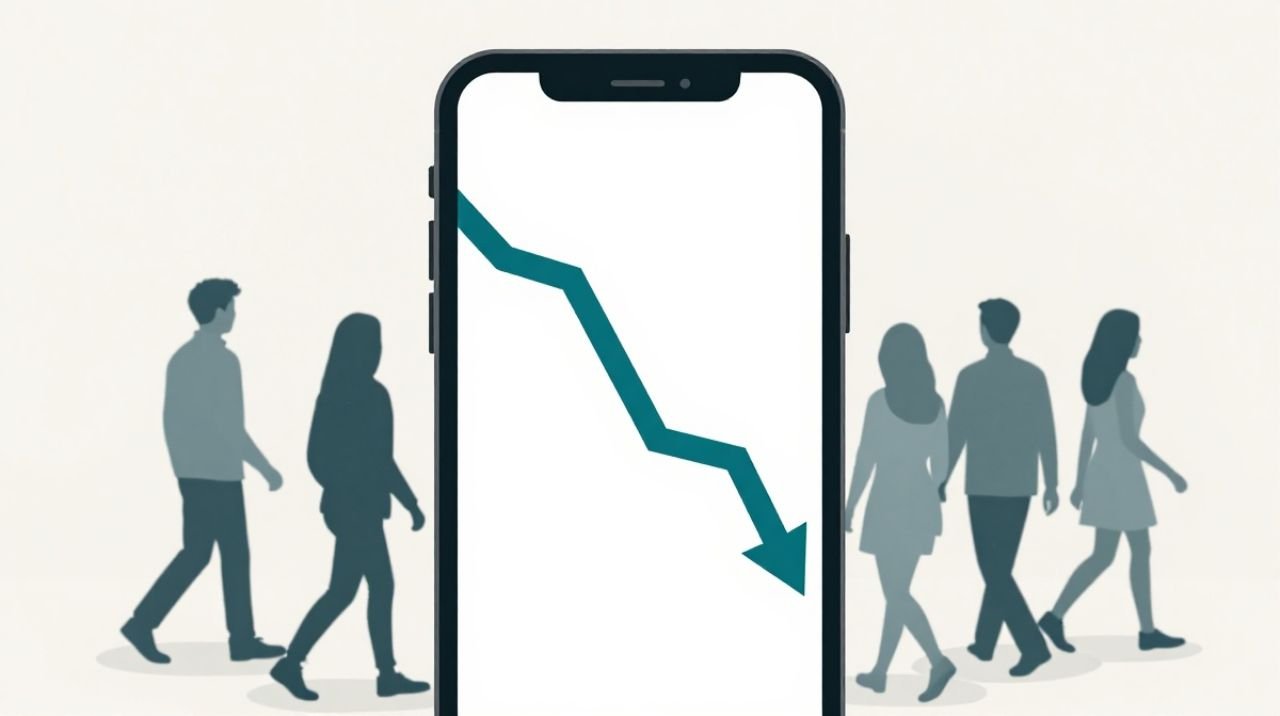
For years, social media platforms counted on Gen Z as their most valuable and loyal user base. But the data in 2026 tells a more complicated story.
According to a 2025 Pew Research Centre report, daily social media use among 18–27-year-olds dropped by nearly 18% compared to 2022 peaks. Instagram, once the defining platform of Gen Z aesthetics and identity, has seen the steepest decline in daily active users among the 16–24 age group in Western markets. TikTok, despite its algorithmic dominance, is facing growing user fatigue—with session times shortening and “passive scroll” replacing the engaged, creative participation the platform was built on.
Gen Z social media habits in 2026 are best described as deliberate ambivalence. Many young people still have accounts — but they check them less, post less, and feel less connected to the experience than they once did. The phrase heard most often? “It stopped feeling like mine.”
This shift matters. It signals not just a preference change but a values change—one that has significant implications for how brands, creators, and platforms engage with the next generation.
Why Gen Z Is Quitting Instagram, TikTok, and X
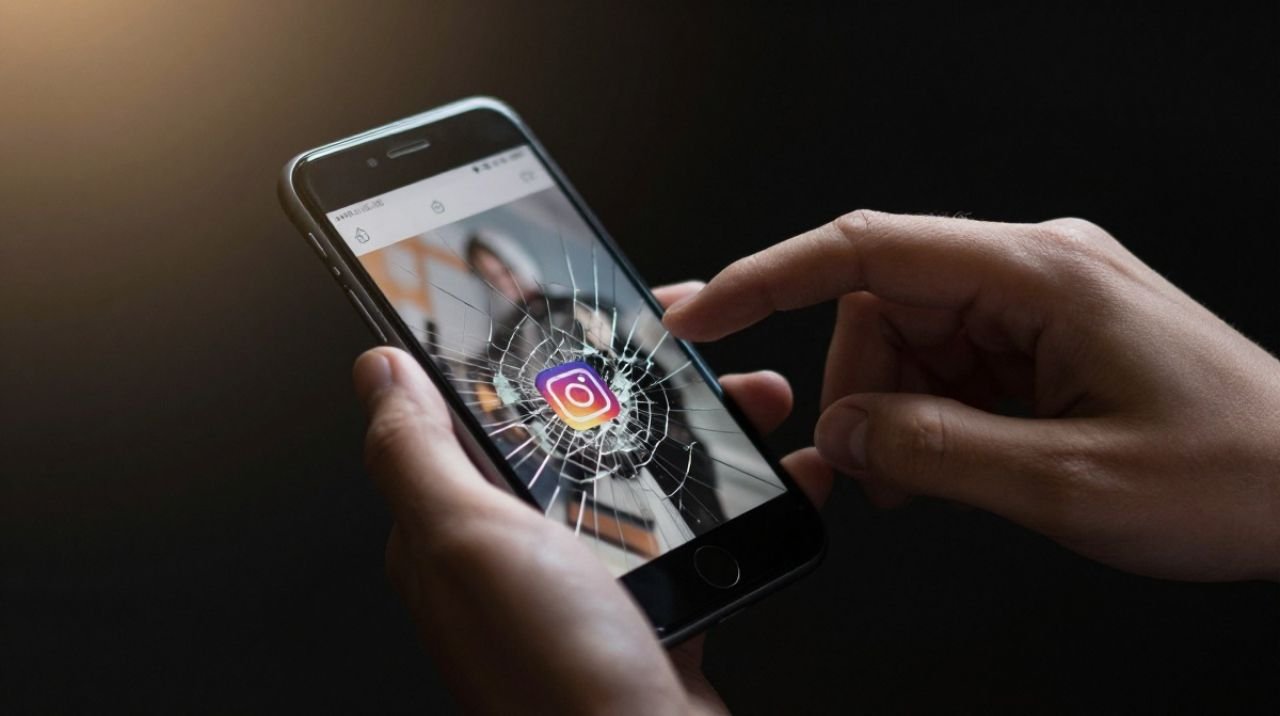
The reasons behind why Gen Z is quitting Instagram and other platforms are not monolithic. They’re layered—part mental health, part cultural fatigue, part ideological. Here’s what the evidence actually shows.
Read Also: How to Market to Gen Z: Authenticity, TikTok, and the End of Traditional Advertising
The Mental Health Toll Is Too Real to Ignore
This is the conversation that’s been building since the early 2020s—and Gen Z is done pretending it doesn’t affect them.
Research from the American Psychological Association’s 2024 The Stress in America report found that 58% of Gen Z respondents identified social media as a significant source of stress and anxiety—higher than any other generation surveyed. Unlike Millennials, who adopted social media as adults and developed coping mechanisms over time, Gen Z grew up inside these platforms. The comparison, the performance, the constant feedback loop of likes and comments — it wasn’t something they chose as teenagers. It was simply the environment they existed in.
Social media anxiety in Gen Z manifests in specific, documented ways: fear of missing out (FOMO), body image disturbances linked to filtered content, identity fragmentation from managing multiple online personas, and the persistent low-grade anxiety of being permanently visible and permanently judged.
In 2025, multiple class-action lawsuits against Meta and ByteDance were filed in the US, EU, and Australia, citing platform design features deliberately engineered to maximize engagement at the expense of user well-being—particularly among minors. The lawsuits brought the internal research these companies had been sitting on into public view. Gen Z reads the headlines. They connected the dots.
The Algorithm Stopped Feeling Human
There was a time when social media felt like a genuine extension of your social world. You’d post a photo and your friends would actually see it. You’d follow creators because you liked them, and their content would appear.
That era is largely over.
In 2026, the feeds on Instagram and TikTok are dominated by content from accounts users have never chosen to follow. Algorithmic recommendations—optimized for watch time, not connection—have flooded timelines with rage bait, clickbait, and hyper-produced content that feels alien to the user’s actual interests. Many Gen Z users describe the experience as “being fed” rather than “choosing.”
This is a fundamental shift in the social contract. Platforms promised community. What they delivered instead was a content delivery machine — one that happens to have a comment section.
Performance Culture Has Become Exhausting
Ask a Gen Z person why they stopped posting, and a common answer emerges: “It felt like a job I never signed up for.”
Social media was once about sharing moments. In the mid-2020s, it became about optimizing them—right lighting, right caption, right posting time, and right hashtags. Even casual posts were quietly auditioned for algorithmic approval. The culture of building a “personal brand”—once mocked as corporate cringe—became default behavior for anyone with an audience above a few hundred followers.
The result? Enormous pressure on Gen Z and digital well-being. Many young creators report a specific kind of exhaustion: not from the act of creating, but from the performance layer that surrounds it. The constant self-monitoring, the comparison to peers’ engagement numbers, the anxiety spiral when a post doesn’t land.
Authenticity became a performance. And Gen Z — a generation with a highly calibrated sense of the genuine versus the performed — started opting out.
Privacy, Data, and a Growing Distrust
Gen Z online behavior trends in 2026 show a growing skepticism about what platforms do with personal data. Unlike older generations who adopted social media before data privacy was a mainstream concern, Gen Z has grown up in the shadow of Cambridge Analytica, endless data breach headlines, and a general cultural awareness that they are the product—not the customer.
A 2024 YouGov survey found that 67% of Gen Z respondents in the UK and US said they didn’t trust social media companies to handle their personal data responsibly. More significantly, 41% said data concerns had directly influenced whether they posted, what they posted, or whether they used a platform at all.
This isn’t paranoia — it’s informed caution. And it’s reshaping Gen Z social media habits in 2026 in ways that go far beyond deleting apps.
Is Gen Z Done With TikTok — Or Just Done With All of It?
The question—is Gen Z done with TikTok?—deserves its own answer because TikTok occupies a unique place in the story.
TikTok’s 2025 user data showed continued global growth in raw numbers. But the nuance is important: much of that growth is now concentrated in Southeast Asia, Latin America, and sub-Saharan Africa—newer markets where the platform hasn’t yet reached saturation or sparked the same cultural backlash. In Western markets—the US, UK, Australia, and Germany—daily active users in the 18–24 bracket have plateaued or declined.
For many Gen Z users, TikTok represents a specific exhaustion: the short-form content treadmill. The dopamine loop of 15-to-60-second videos is both the platform’s genius and its problem. Users describe feeling mentally foggy after long sessions—a phenomenon increasingly referred to in popular discourse as “TikTok brain”—characterized by a reduced ability to sustain attention on longer-form content, books, or conversations.
The US ban attempts of 2024 and early 2025 also introduced a layer of political fatigue around the platform. Even when the bans were blocked or paused by the courts, the controversy eroded casual trust among users who didn’t want to invest emotionally in a platform with an uncertain future.
TikTok isn’t dead in 2026. But for a meaningful and growing segment of Gen Z, it’s no longer the center of the universe it once was.
Social Media Anxiety in Gen Z: A Deeper Look
Social media anxiety in Gen Z deserves to be treated as more than a headline. The clinical picture is specific and worth understanding.
Research published in the Journal of Adolescent Health in 2024 identified a cluster of symptoms associated with heavy social media use in 18–25-year-olds—distinct from generalized anxiety disorder but sharing some features. These include:
- Comparison-triggered low self-worth — triggered by curated highlight reels that become a reference point for real-life adequacy
- Notification dependency—a measurable stress response associated with the absence of expected social feedback (likes, comments, shares)
- Identity inconsistency distress — the cognitive dissonance of maintaining a public persona that diverges significantly from one’s private self
- Passive consumption guilt — the specific discomfort of spending hours scrolling without “doing” anything, followed by shame.
What makes Gen Z’s experience distinct is the self-awareness they bring to it. This is the first generation to grow up with widespread discourse about social media’s psychological effects. Many Gen Z users can articulate their anxiety triggers clearly — and that awareness is increasingly translating into action. Not just digital detoxes or “phone-free weekends,” but structural changes to their relationship with social platforms.
What Gen Z Is Doing Instead of Scrolling

Here’s where the story gets genuinely interesting. Alternatives to social media for Gen Z aren’t just an absence — they’re a replacement. And the replacements reveal a lot about what Gen Z actually wants from digital (and non-digital) life.
Discord and Niche Online Communities
Discord, originally a gaming platform, has emerged as one of the primary social alternatives for Gen Z in 2026. The key difference: it’s built around chosen communities, not algorithmic broadcasts. You join a server because you specifically want to be there. You’re not passively fed content — you actively participate in focused conversations with people who share a specific interest.
This mirrors a broader Gen Z online behavior trend: a move away from public broadcasting and towards smaller, intentional digital spaces. Servers focused on niche interests—indie music, film criticism, mental health support, coding projects, and creative writing—provide the social connection Gen Z wants without the performance anxiety that comes with public-facing platforms.
Reddit, despite its older cultural reputation, is also seeing significant Gen Z growth — particularly in subreddits focused on specific hobbies, career paths, and identity communities. The relative anonymity, combined with a topic-first rather than person-first structure, suits a generation that’s tired of self-branding.
Analogue Hobbies and Offline Socialising
One of the most striking social media detox trends among young people is the return to analog. Film photography, journaling, vinyl records, knitting, baking, pottery — all are seeing significant Gen Z adoption, with communities forming both online and in person around them.
The appeal is clear when you look at it through the lens of platform fatigue: analog hobbies produce outcomes that exist outside the attention economy. A loaf of bread you baked doesn’t need an audience to be meaningful. A journal entry doesn’t have a like count. A roll of film teaches you patience in a way that an iPhone never could.
Offline socializing is also making a comeback—not just as a vague cultural ideal, but as an active, deliberate choice. Gen Z friend groups are increasingly creating phone-free dinner rules, planning trips without documenting them, and measuring the quality of an evening by how little they look at their screens.
Substack, Newsletters, and Intentional Content
Gen Z and digital well-being have spawned a specific appetite: content that respects attention rather than exploiting it. Substack and long-form newsletter culture have found a surprisingly enthusiastic Gen Z audience—readers who are tired of algorithmic content discovery and want to choose what arrives in their inbox.
The newsletter format appeals to the Gen Z preference for depth over breadth, for relationships over broadcasts. Following a writer on Substack is a different act than following them on Instagram—it’s quieter, more personal, and less competitive. You’re not comparing follower counts. You’re just reading something someone wrote.
Podcasting continues to grow as a primary content medium for Gen Z — with long-form, conversational formats consistently outperforming short-form video in terms of loyal repeat listenership among 18–27-year-olds.
Gaming as a Social Space
For a significant portion of Gen Z—particularly but not exclusively among young men—online gaming has become the primary social media alternative. Games like Fortnite, Minecraft, and a wave of indie multiplayer titles provide exactly what traditional social media promised but stopped delivering: genuine real-time connection with friends, shared experiences, and a sense of place.
The social layer of gaming is often underestimated by those who don’t participate in it. Voice chat, collaborative missions, in-game communities, and the shared vocabulary of a game create a form of intimacy that Instagram’s comment section simply cannot replicate.
BeReal, Geneva, and Low-Pressure Platforms
Not all of Gen Z’s digital alternatives are offline. A cluster of smaller platforms has emerged to fill the psychological gap left by Instagram and TikTok, built around different values.
BeReal, despite its 2022-era hype cycle, has found a more stable audience among users who genuinely want unfiltered sharing — no filters, no editing window, just a simultaneous front-and-back camera photo taken at a random moment in the day.
Geneva, a group-chat-forward platform somewhere between Discord and WhatsApp, has found traction among Gen Z communities that want closed-group intimacy at a slightly larger scale—think university year groups, creative collectives, or friendship networks that are too big for a WhatsApp group but too personal for a public Discord server.
The common thread across all these platforms: they’re low-pressure. They don’t reward follower counts. They don’t expose you to strangers’ opinions. They’re built for the kind of social interaction Gen Z actually wants — real, contained, and human.
What This Means for the Future of Social Media in 2026
Gen Z social media habits in 2026 aren’t just a story about individual behavior. They’re a signal about where the entire social media industry is heading.
Platforms are already responding — though not always effectively. Meta’s push into AI-generated content on Instagram and Facebook has been widely panned by younger users as an accelerant of exactly what drove them away. TikTok’s push into longer-form content (up to 10-minute videos and now hour-long uploads) is an attempt to capture the podcasting and YouTube market — but it risks diluting the identity that made TikTok compelling in the first place.
The platforms that will survive Gen Z’s disillusionment are the ones that figure out how to rebuild trust—through genuine privacy protection, transparent algorithmic practices, and design choices that prioritize user well-being over engagement maximization. That’s a high bar. Most current platforms weren’t built with those values at their core. Retrofitting them is slow, expensive, and commercially inconvenient.
Meanwhile, the brands and creators who understand this shift will have a significant advantage. The future of reaching Gen Z isn’t a louder presence on Instagram or a better TikTok hook—it’s genuine community, earned trust, and content that respects the intelligence and time of its audience.
The future of social media in 2026 is not the death of social media. It’s the death of passive, algorithmic, broadcast social media—and the slow, uncertain rise of something more intentional in its place.
Frequently Asked Questions
Why is Gen Z leaving social media in 2026?
Gen Z is stepping back from social media due to a combination of mental health concerns, algorithm fatigue, performance culture burnout, and growing distrust of how platforms handle personal data. Many young people describe social media as no longer feeling authentic or worth the psychological cost. The shift is less about rejection and more about intentionality—using platforms on their own terms, or not at all.
Why is Gen Z quitting Instagram specifically?
Instagram has become synonymous with curated, filtered performance culture — a far cry from its origins as a casual photo-sharing app. Gen Z users frequently cite the platform’s increasingly algorithmic feed, the dominance of aspirational influencer content, and the pressure to maintain an aesthetic identity as reasons for reducing or ending their use. The platform’s shift toward Reels and AI-suggested content has accelerated this disenchantment.
Is Gen Z actually done with TikTok?
In Western markets, a significant and growing segment of Gen Z is reducing TikTok use—citing mental fatigue from the short-form content loop, political uncertainty around the platform’s future, and a general sense of algorithm oversaturation. However, TikTok remains popular globally, and many Gen Z users maintain a presence while scaling back active use. The relationship is complicated rather than finished.
What are Gen Z’s alternatives to social media?
Gen Z is turning to Discord communities, long-form newsletters and Substack, podcasting, online gaming, analogue hobbies, and smaller low-pressure platforms like BeReal and Geneva. The common theme is intentionality—spaces chosen because they serve a specific need, rather than platforms designed to maximize passive engagement.
How does social media affect Gen Z’s mental health?
Research consistently links heavy social media use in Gen Z to elevated rates of anxiety, depression, body image issues, and social comparison distress. Unlike older generations, Gen Z grew up entirely inside these platforms—making the psychological effects more deeply embedded. Many young people report that reducing social media use has had a measurable positive impact on their well-being, sleep, and focus.
Is social media detox becoming mainstream for young people?
Yes. What was once framed as a niche wellness practice has become a widely accepted behavior among Gen Z. Social media detoxes — ranging from a few days to permanent deactivation — are discussed openly among young people as a response to burnout and anxiety. In 2025, several UK and US universities reported rising uptake of digital well-being programs targeting social media habits specifically.
What does Gen Z actually want from social platforms?
Based on their migration patterns, Gen Z wants digital spaces that are intimate over broadcast, interest-driven over identity-driven, low-pressure over performance-oriented, and transparent over manipulative. They want connection — not followers. They want community — not audience. The platforms that deliver on those values, at scale, are the ones with the strongest Gen Z futures.
Final Thoughts: The Intentional Generation
Gen Z leaving social media in 2026 is not a crisis for young people — it’s a correction. After years of being told that their worth could be measured in likes, their identity built in feeds, and their social lives managed through algorithms, a generation raised inside these platforms is pushing back. Not with protest, but with exits. Quiet, deliberate, purposeful exits.
The spaces they’re moving to—Discord servers, analog hobbies, newsletters, games, and small private communities—reveal exactly what they wanted from social media all along: genuine connection, safe spaces, and content that serves them rather than extracting from them.
For anyone trying to reach, understand, or build for Gen Z, the message is clear: earn the relationship. Respect the attention. Build something real.
Want to go deeper on Gen Z digital behavior and what it means for content in 2026? Explore our related posts on the future of community marketing, digital well-being strategy, and how to build brand trust with younger audiences—linked throughout this post.