
You’re putting in the work. You’re writing posts, hitting publish, and waiting. But the traffic never shows up.
If that sounds familiar, I want you to know it’s not because blogging is dead, and it’s not because your niche is too competitive. In most cases, it comes down to a handful of fixable blogging mistakes that quietly strangle your growth before Google ever gets the chance to notice you.
I’ve worked with enough bloggers and content creators to know that the gap between a blog that stagnates and one that grows isn’t talent or luck. It’s a strategy. Specifically, it’s avoiding the common blogger mistakes that most people don’t even realize they’re making.
In this post, I’m going to walk you through the most damaging blogging mistakes I see killing traffic — and more importantly, exactly how to fix blog traffic once you’ve identified what’s going wrong. Whether you’re just starting or you’ve been blogging for years without seeing the results you want, this one’s for you.
- MISTAKE #1 | Writing for Yourself Instead of Your Audience
- MISTAKE #2 | Ignoring SEO From the Start
- MISTAKE #3 | Inconsistent Publishing — The Silent Traffic Killer
- MISTAKE #4 | Targeting Keywords That Are Too Competitive
- MISTAKE #5 | Writing Thin Content With No Real Depth
- MISTAKE #6 | Skipping Internal Linking
- MISTAKE #7 | No Clear Call to Action
- MISTAKE #8 | Slow Load Speed and Poor Mobile Experience
- MISTAKE #9 | Ignoring Analytics — Flying Blind
- MISTAKE #10 | Giving Up Too Soon
- Key Takeaways
- Final Thoughts! Avoid the Blogging Mistakes
MISTAKE #1 | Writing for Yourself Instead of Your Audience

This is the most common blogging mistake I see—and the most damaging. Bloggers write about what interests them, in a way that makes sense to them, without ever pausing to ask, “Does my reader actually need this?”
Here’s the truth: your blog is not a diary. It’s a service. And every post you publish should solve a specific problem for a specific person. When you write for yourself, you create content that gets no traction because it answers questions nobody is asking.
Ask yourself before every post: Who is reading this? What do they want to know? What problem does this solve for them? If you can’t answer those questions clearly, you don’t have a blog post—you have a journal entry.
THE FIX: Before writing any post, define the reader persona and the specific problem the post solves. Use tools like AnswerThePublic, Reddit, and Quora to find exactly what your target audience is asking — then build your content around those real questions.
MISTAKE #2 | Ignoring SEO From the Start

You can write the best blog post in your niche and still get zero traffic if nobody can find it. That’s the reality of blogging without SEO.
Many bloggers—especially beginners—treat SEO as something they’ll “figure out later.” “But SEO isn’t a layer you add on top of content after it’s written. It’s a foundation you build before you write a single word. Every post should begin with keyword research: finding the actual search terms your audience uses, understanding the intent behind those terms, and structuring your content to match what Google and your readers expect.
If you’re asking yourself, “Why is my blog not getting traffic?” and you’ve never done proper keyword research, this is almost certainly your answer.
THE FIX: Start every post with keyword research. Choose a primary keyword your audience is actively searching for, confirm the search intent, and weave it naturally into your title, introduction, subheadings, and meta description. Don’t write a single post without an SEO strategy behind it.
MISTAKE #3 | Inconsistent Publishing — The Silent Traffic Killer

Here’s what happens when you publish inconsistently: Google stops crawling your site regularly. Your audience forgets you exist. Your authority in your niche never builds. And you stay stuck on page 3 indefinitely.
In my experience, consistency is the single biggest differentiator between blogs that grow and blogs that plateau. It’s not about publishing every day — it’s about publishing on a reliable schedule that your audience and search engines can depend on.
One high-quality post per week, published consistently for 6 to 12 months, will outperform three posts one week and nothing for the next three. Every time.
THE FIX: Set a publishing schedule you can realistically maintain — even if it’s just one post every two weeks — and stick to it without exception. Use a content calendar to plan 4 weeks so you’re never scrambling for ideas at the last minute.
MISTAKE #4 | Targeting Keywords That Are Too Competitive

I see this constantly with newer bloggers. They go after terms like “digital marketing tips” or “how to make money online” — keywords with millions of competing pages — and then wonder why they can’t break onto page one.
The truth is, when you’re starting, going head-to-head with HubSpot, Forbes, and Neil Patel is a losing battle. You need to be smarter about which keywords you target. That means going long-tail — finding specific, lower-competition variations of your topic where you can realistically rank.
A keyword like “digital marketing tips for small local businesses in 2026” will drive less traffic in absolute numbers. Still, it’s far more achievable, and the searcher is far more likely to be exactly your ideal reader.
THE FIX: Filter every keyword by difficulty score relative to your site’s authority. If you’re a newer blog (domain rating under 30), focus on keywords with a difficulty score below 20. Use long-tail variations to get your first wins, then build upward as your authority grows.
MISTAKE #5 | Writing Thin Content With No Real Depth
Google has become remarkably good at distinguishing between content that genuinely helps people and content that fills space. A 400-word post that skims the surface of a topic isn’t going to rank in 2026 — full stop.
What most people miss is that length isn’t the goal. Depth is the goal. A 2,000-word post that covers every angle of a topic, answers follow-up questions, and provides real examples will outperform a 3,000-word post padded with fluff every single time.
When I research top-ranking content on any topic, I look for what they’ve covered well—and more importantly, what they’ve missed. Those content gaps are your opportunity to write something genuinely more useful than what’s already out there.
THE FIX: Before writing, analyse the top 5 ranking posts for your target keyword. Note what they cover, what they skip, and how you can create something more comprehensive, more current, and more actionable. Aim for depth over word count — cover the topic completely, not just partially.
MISTAKE #6 | Skipping Internal Linking

Internal linking is one of the most underused SEO tactics in blogging and one of the easiest to fix. When you link from one post to another on your own blog, you do three important things:
- You help Google discover and crawl more of your content.
- You pass authority from older, established posts to newer ones.
- You keep readers on your site longer, reducing bounce rate.
Many bloggers treat their posts as standalone pieces of content. That’s a missed opportunity. Every post should link to at least two or three other relevant posts on your blog, and every new post you publish should trigger a review of older posts to see where you can add a link back to it.
THE FIX: Every time you publish a new post, spend 10 minutes identifying 2-3 existing posts where you can naturally add a link to the new one. And within every new post, link to at least 2-3 older posts that provide additional value to the reader.
Read More about Internal Linking in SEO – How to Optimize Properly
MISTAKE #7 | No Clear Call to Action

You’ve written a great post. The reader reaches the end. And then… nothing. No next step, no invitation, no direction. They close the tab and move on.
Every blog post needs a clear, specific call to action. Not a generic “Thanks for reading”—an actual instruction that tells your reader what to do next. Whether that’s subscribing to your newsletter, leaving a comment, reading a related post, or downloading a resource, give them a next step.
A post without a CTA is a missed opportunity to convert a casual reader into a loyal audience member. And loyal audience members are what separate a traffic spike from sustainable blog growth.
THE FIX: End every post with a specific CTA. Rotate between: asking readers to comment with a specific question, inviting them to subscribe, directing them to a related post, or encouraging them to share. Match the CTA to the content — a beginner’s guide should direct readers to your next foundational post; an advanced tutorial might direct them to a deeper resource or tool.
MISTAKE #8 | Slow Load Speed and Poor Mobile Experience
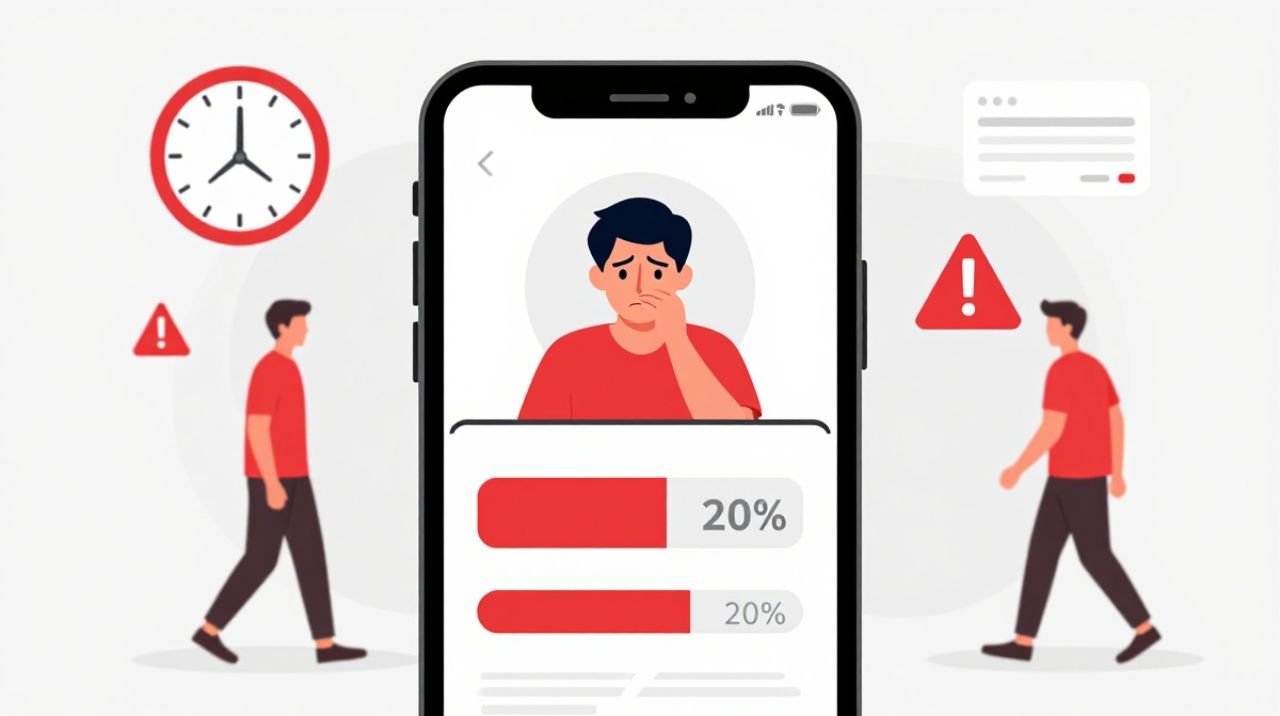
This one surprises people — but it’s technical, not content-related, and it affects everything.
Google uses page speed and mobile-friendliness as direct ranking factors. If your blog takes 6 seconds to load or is difficult to read on a smartphone, you’re losing both rankings and readers before they’ve read a single word you’ve written.
In 2026, with mobile accounting for the majority of web traffic globally, a poor mobile experience isn’t just an inconvenience—it’s a traffic death sentence.
THE FIX: Run your blog through Google PageSpeed Insights (free) and fix the top recommendations. Common quick wins include compressing images before uploading, using a lightweight theme, enabling caching, and switching to a faster hosting provider if needed. Test your blog on mobile monthly — not just on launch.
Read More about The Speed Optimization Plugin Showdown: WP Rocket vs. W3 Total Cache
MISTAKE #9 | Ignoring Analytics — Flying Blind

You can’t fix what you don’t measure. If you’re not regularly reviewing your blog’s analytics, you’re making every decision based on assumptions—and assumptions are expensive.
Google Search Console and Google Analytics are free tools that tell you exactly which posts are getting traffic, which keywords you’re ranking for, where your readers are dropping off, and what’s actually working. That data is a goldmine — but only if you use it.
In my experience, bloggers who review their analytics monthly grow faster than those who don’t—not because they have more talent, but because they know what to double down on and what to stop doing.
THE FIX: Set up Google Search Console and Google Analytics if you haven’t already. Schedule a monthly analytics review. Look for: posts with impressions but low clicks (fix the meta title and description); posts with traffic but high bounce rate (improve the content or internal links); and keywords you’re ranking on page 2 for (update those posts to push them to page 1).
MISTAKE #10 | Giving Up Too Soon

Here’s the truth nobody wants to hear: most blogs fail not because of bad content or wrong strategy but because the blogger quits before the results arrive.
SEO takes time. A new blog typically needs 6 to 12 months of consistent effort before it starts gaining meaningful organic traffic. That’s not a flaw in the system — it’s just how search engine trust is built. Google wants to see that you’re a reliable, consistent publisher before it starts sending you significant traffic.
I’ve seen bloggers with genuinely excellent content give up at month four because they weren’t seeing results—only to find out later that they were three months away from a breakthrough.
THE FIX: Set realistic expectations: commit to at least 12 months of consistent publishing before evaluating whether your strategy is working. Track leading indicators — impressions, keyword rankings, and backlinks — not just traffic. These early signals tell you whether you’re on the right path, even when traffic is still low.
Key Takeaways
- Write for your audience, not for yourself — every post should solve a real problem for a specific reader.
- SEO is not optional — no keyword strategy means no traffic, regardless of how good your content is.
- Consistency beats frequency — one post per week published reliably will outperform sporadic bursts of publishing.
- Target keywords you can actually rank for — long-tail keywords are your fastest path to early traffic wins.
- Depth beats length — write comprehensive content that covers a topic fully, not content that simply fills word count.
- Internal linking is free SEO — connect your posts to build authority and keep readers on your site longer.
- Every post needs a CTA — tell readers exactly what to do next, every single time.
- Fix your technical foundation — slow speed and poor mobile experience undo all your content work.
- Use your analytics—monthly data reviews are the fastest way to identify what’s working and what needs fixing.
- Give it time — commit to 12 months before you judge whether your blog strategy is working.
Final Thoughts! Avoid the Blogging Mistakes
If you’ve been asking yourself, “Why is my blog not getting traffic?” the answer is almost always in this list.
The good news? Every single one of these blogging mistakes is fixable. You don’t need a new niche, a new blog, or a complete restart. You need a clear-eyed audit of what’s going wrong, the discipline to fix it, and the patience to let the results build.
The bottom line is this: blogging success is not a mystery. It’s a system. And the bloggers who win are the ones who learn the system, eliminate the mistakes, and keep showing up—especially when it feels like nothing is working.
Take action on one fix from this post today. Just one. Because one smart change, applied consistently, is more powerful than ten insights left on the shelf.
Your Turn
Which of these blogging mistakes hits closest to home for you? Drop a comment below and tell me, which one are you fixing first?
And if you found this post useful, share it with a blogger in your network who needs to hear this. Sometimes all it takes is one honest article to change the direction of someone’s entire blog.
Not on my weekly newsletter yet? Subscribe below—every week, I send one actionable blogging, SEO, or marketing strategy straight to your inbox. No fluff. Just results.