
Running your first paid campaign can feel confusing: there are objectives, audiences, placements, budgets, creative formats, and reports to understand. A practical Facebook ad strategy makes those choices easier by connecting every decision to one business goal. You do not need a huge budget or a complicated funnel to begin. You need a clear offer, the right objective, a useful message, reliable tracking, and a plan for learning from results.
This beginner-friendly guide explains how to plan, launch, and improve a Facebook advertising campaign in 2026. It also builds on the basics in our guides to improving your Facebook marketing and understanding social media marketing, so you can connect paid campaigns with your wider marketing efforts.
- What Is a Facebook Ad Strategy?
- Step 1: Set a Clear Advertising Goal
- Step 2: Choose the Right Campaign Objective
- Step 3: Understand Your Target Audience
- Step 4: Set a Realistic Budget and Schedule
- Step 5: Create an Ad That Makes the Value Obvious
- Step 6: Build a Landing Page That Continues the Promise
- Step 7: Set Up Conversion Tracking
- Step 8: Launch, Review, and Optimise Carefully
- Step 9: Avoid Common Beginner Mistakes
- A Simple 7-Day Facebook Ads Starter Plan
- Frequently Asked Questions
- Conclusion: Keep Your First Campaign Simple
- How to Structure Your First Campaign in Ads Manager
- Three Ad Examples You Can Adapt
- Use a Weekly Review Sheet
What Is a Facebook Ad Strategy?
A Facebook ad strategy is a plan for using paid placements on Facebook and other eligible Meta platforms to reach a defined audience and encourage a valuable action. That action might be a purchase, lead form submission, message, booking, website visit, or increased awareness.
A strong strategy answers five questions before you spend money:
- Goal: What should the campaign achieve?
- Audience: Who is most likely to take that action?
- Offer: Why should they care or act now?
- Creative: What image, video, and message will communicate the value?
- Measurement: Which result will tell you whether the campaign is working?
Facebook ads are not a shortcut around a weak offer or a confusing website. Paid distribution can introduce your business to people, but the ad, landing page, pricing, trust signals, and follow-up all influence what happens next.
Step 1: Set a Clear Advertising Goal
Decide what success means before opening Ads Manager. If your objective is vague, it becomes difficult to choose settings or judge performance. Avoid goals such as “get more customers” unless you define what counts as a customer and how you will measure the outcome.
Examples of specific goals include:
- An online store wants to generate purchases of a particular product.
- A local service provider wants qualified quote requests.
- A consultant wants people to book an introductory call.
- A new brand wants relevant people to discover its products.
- A content publisher wants readers to visit a useful article.
Choose one main outcome for each campaign. You can monitor supporting metrics, but do not try to make one small campaign do everything at once. For a deeper look at campaign planning, see our social media marketing plan resources.
Step 2: Choose the Right Campaign Objective
Meta Ads Manager groups campaigns around objectives such as awareness, traffic, engagement, leads, app promotion, and sales. The exact options and setup can vary by account, destination, and current interface. Select the objective that most closely matches the action you want the system to optimize for—not the metric that sounds impressive.
| Objective | Use it when | Watch out for |
|---|---|---|
| Awareness | You want to introduce a brand or increase visibility. | Reach alone does not prove business impact. |
| Traffic | You want visits to a website or another destination. | Clicks may not turn into customers. |
| Engagement | You want interactions, video views, or eligible messaging activity. | Engagement is not automatically a sale. |
| Leads | You need inquiries, sign-ups, calls, or form submissions. | Measure lead quality, not just lead volume. |
| App promotion | You want app installs or relevant app actions. | Make sure app events are configured where needed. |
| Sales | You want purchases or other supported conversion events. | Reliable conversion tracking is especially important. |
For example, if you sell a product on your website and can track purchases, a sales objective is usually a more direct fit than traffic. If you provide a service and need people to request a quote, a Leads campaign may be more appropriate. Meta’s official learning resource explains how to align campaign objectives with business goals.
Step 3: Understand Your Target Audience
Good targeting begins with customer knowledge, not with adding as many interests as possible. Write a simple audience profile: what the person needs, what problem they want to solve, what location you serve, and what might stop them from buying.
Use broad targeting thoughtfully.
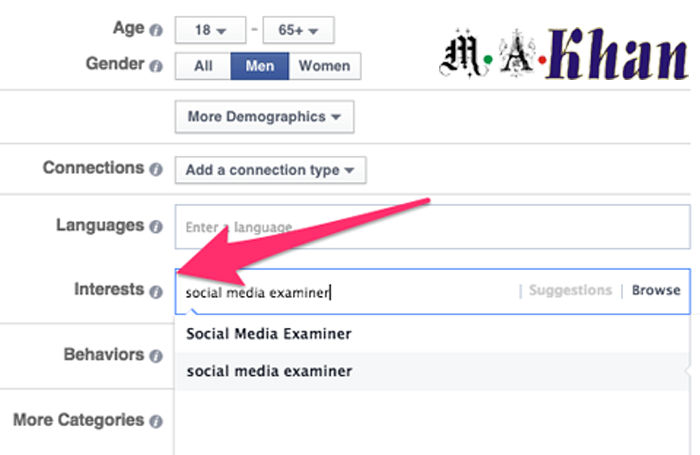
Meta’s automated audience options may help the delivery system find likely responders, particularly when it has useful conversion signals and enough room to learn. Beginners should avoid narrowing an audience without a clear reason. Start with the essential constraints—such as geography, age eligibility, language where relevant, and the audience required by your offer—then test additional restrictions only when evidence supports them.
Use custom audiences when appropriate.
If you have lawful, permission-based first-party data and the necessary account setup, custom audiences can help you reconnect with people who have engaged with your business. Website audiences may require the Meta Pixel or other supported data connections. Customer lists must be handled according to applicable privacy rules and Meta’s terms. Do not upload data unless you have the right to use it for advertising.
For local businesses, the service area matters more than an enormous national audience. For online products, the potential customer base may be wider, but your message and landing page still need to be relevant. Also check whether your ad falls into a special category, such as housing, employment, credit, or political/social issue advertising, because additional restrictions may apply.

Step 4: Set a Realistic Budget and Schedule
Choose a test budget you can afford to spend without relying on immediate returns. There is no universal daily amount that guarantees results: the right level depends on your market, offer price, competition, conversion rate, and objective. Treat your first campaign as a controlled experiment, not a promise of profit.
Before launching, calculate a rough acceptable cost per result. For a lead-generation campaign, estimate how many qualified leads usually become customers and what a new customer is worth to your business. For an online store, consider product margin, shipping, refunds, and other costs—not just revenue.
For example, if a service can reasonably spend up to £30 to acquire a qualified lead based on its sales process, the campaign should be assessed against lead quality and the actual cost per qualified lead. This is an illustrative planning example, not a benchmark or guarantee.
- Use a daily budget when you want a regular spending pace.
- Use a lifetime budget when you have a defined campaign period and total spend limit.
- Set an end date or review reminder so a test does not run indefinitely.
- Avoid changing many settings every few hours; frequent significant edits can make results harder to interpret.
Step 5: Create an Ad That Makes the Value Obvious
Your ad creative includes the image or video, primary text, headline, destination, and call to action. A beginner-friendly ad does not need elaborate production. It needs to stop the right person, communicate one benefit, and make the next step clear.
Use a simple copy framework.
- Problem or desire: Name a relevant need in plain language.
- Benefit: Explain what your offer helps the customer do.
- Proof or detail: Include a verifiable feature, process, demonstration, or genuine testimonial with permission.
- Call to action: Tell people what to do next.
Example for a fictional bookkeeping service: “Spending evenings sorting business receipts? Our monthly bookkeeping service helps small business owners keep records organized and prepare for tax time. See what is included and request a consultation.” This is clearer than “We are the best. Buy now!” because it identifies a problem and explains a relevant benefit without making an unsupported claim.
Choose a format that fits the message.
Use a single image for a simple offer, a short video to demonstrate a process, a carousel to explain several product features, or a vertical video when it suits placements such as Reels. Design for mobile first: use readable text, a clear subject, good contrast, and enough space around important elements. Avoid putting essential information only in tiny image text.
Test a small number of genuinely different creative ideas. Changing the opening hook, showing the product in use, or presenting a different customer benefit can teach you more than changing a tiny design detail. Meta’s guide to Facebook and Instagram Reels ads offers additional creative and placement guidance.
Step 6: Build a Landing Page That Continues the Promise
The ad is only the beginning of the customer journey. When someone clicks, the destination should repeat the same offer and make the next action easy. If an ad promises a free consultation, do not send visitors to a general homepage where they must search for the booking form.
Before launch, check that the landing page:
- Loads quickly and works on a phone.
- Explains the offer, price, or next step clearly.
- Uses a visible call-to-action button or form.
- Includes appropriate contact details, policies, and trust signals.
- Does not contain broken links, confusing pop-ups, or unexpected steps.
- Matches the wording and creative in the ad.
For a lead campaign, ask only for information you need to respond. For a product campaign, make shipping, returns, availability, and checkout steps easy to understand. A low-cost click is not valuable if the destination fails to help visitors complete the task.
Step 7: Set Up Conversion Tracking
Tracking helps you understand what people do after seeing or clicking an ad. Depending on your campaign, useful measurements may include landing-page views, lead submissions, purchases, booking completions, or qualified messages.
For website conversions, review the available Meta Pixel and Conversions API setup options and configure them according to your website, consent obligations, and technical resources. Check that the events you care about are firing correctly. If the event setup is wrong, Ads Manager may report misleading results or struggle to optimize toward the intended outcome.
Use UTM parameters when you need to distinguish campaign traffic in your analytics platform. Keep campaign naming consistent—for example, 2026-11-leads-local-service-creative-a—so future reports remain understandable. Do not rely on a single dashboard alone: compare platform reporting with your CRM, order system, or booking records where appropriate.

Step 8: Launch, Review, and Optimise Carefully
Before publishing, review the campaign objective, destination, audience settings, placements, budget, dates, creative, call to action, and tracking. Check spelling and preview the ad on the placements where it may appear. Make sure your offer is accurate and complies with Meta’s advertising policies.
After launch, look at results in context. Useful metrics include:
- CTR (click-through rate): The share of impressions that resulted in a click, depending on the CTR definition shown in the report.
- CPC (cost per click): How much you pay per click under the selected reporting definition.
- Cost per result: Spend divided by the results attributed to the campaign.
- Conversion rate: The share of relevant visitors who completed the desired action.
- ROAS: Attributed revenue divided by ad spend, when revenue tracking is suitable.
- Lead quality or customer acquisition cost: Whether results translate into real business value.
Do not judge success by likes alone if your real goal is sales. A campaign can receive many clicks but few purchases because the audience, offer, or landing page is wrong. Conversely, a campaign with fewer clicks may produce more qualified enquiries. Use the metric that reflects your original goal.
Use a simple decision process.
- Check that tracking is working and the campaign is delivering.
- Look for the largest clear problem, rather than changing everything.
- Compare creative, audience, and destination performance where the data is meaningful.
- Make one major change at a time when possible.
- Record what you changed and when, then review the next set of results.
Meta’s delivery system may need time and enough relevant events to learn. Do not assume that every campaign will achieve a particular number of conversions in a week; outcomes depend on budget, audience, market, and conversion volume. Make changes based on the evidence available in your account, not a fixed internet rule.
Step 9: Avoid Common Beginner Mistakes
- Choosing the wrong objective: Optimizing for traffic when you need qualified leads can attract people who click but do not convert.
- Targeting too narrowly: Excessive restrictions may reduce delivery opportunities without improving relevance.
- Testing too many things at once: If the audience, creative, budget, and offer all change together, you cannot easily identify what caused the result.
- Using weak creative: Generic claims and unclear visuals give people little reason to act.
- Ignoring the landing page: A good ad cannot fully compensate for a slow or confusing destination.
- Making decisions too quickly: A small number of clicks or conversions may not provide enough evidence.
- Failing to follow up: Leads lose value if no one responds promptly and helpfully.
- Ignoring policies and privacy: Misleading claims, restricted targeting, or inappropriate use of personal data can create compliance problems.
Use organic content to answer common questions, show expertise, and build trust between campaigns. Our guides on Facebook’s algorithm and organic reach, and sharing Instagram Reels to Facebook, can help you coordinate paid and unpaid activity.
A Simple 7-Day Facebook Ads Starter Plan
| Day | Task |
|---|---|
| 1 | Define the goal, offer, target customer, and acceptable cost per result. |
| 2 | Review the Facebook Page, landing page, checkout or lead form, and privacy requirements. |
| 3 | Choose the objective, prepare tracking, and decide the budget and test period. |
| 4 | Create two or three distinct creative concepts and write clear ad copy. |
| 5 | Launch after checking settings, previews, links, and policy requirements. |
| 6 | Check delivery and tracking. Avoid major changes based on very limited data. |
| 7 | Review the available results, document what you learned, and decide what to test next. |
This is a planning framework, not a promise that a campaign will be fully optimized in seven days. Some businesses need a longer test window or more conversion data to make a sound decision.
Frequently Asked Questions
What is the best Facebook Ad strategy for beginners?
Start with one clear goal, one relevant audience, a strong offer, a small set of creative variations, a budget you can afford, and accurate tracking. Choose the objective that matches the result you want and improve the campaign using meaningful data.
How much money should a beginner spend on Facebook ads?
There is no universal starting budget. Set a test amount based on your finances and the likely cost of reaching your goal. Define a maximum spend and an acceptable cost per result before launch, and do not spend money you cannot afford to lose.
Should I choose Traffic or Sales?
Choose Traffic when website visits are the intended outcome. Choose Sales when you want purchases or supported conversion actions and have the necessary tracking in place. For enquiries, a Leads objective may be a better fit. Always check the options currently available in your Ads Manager.
How many ads should I test at once?
Keep the first test manageable. Two or three meaningfully different creative concepts can provide a useful starting point, but the appropriate number depends on budget, audience size, and expected result volume. Too many variations can spread a small budget too thinly.
How long does it take to see results?
Some early signals may appear quickly, but reliable conclusions depend on the objective, budget, market, and number of meaningful results. Check delivery and tracking early, then allow enough data to accumulate before making major changes.
Are Facebook ads suitable for small businesses?
They can be, if the business has a clear offer, a reachable audience, a useful destination, and a way to measure results. Start with a controlled test and compare advertising costs with actual leads, sales, or other business outcomes.
Conclusion: Keep Your First Campaign Simple
The best Facebook Ad strategy for a beginner is not the one with the most settings. It is the one that links a clear business goal to a relevant audience, useful creative, a consistent landing page, and reliable measurement. Start small, monitor the right metrics, and make changes for a reason rather than reacting to every daily fluctuation.
Before launching your next campaign, review your wider Facebook marketing approach and keep your paid ads aligned with your overall social media marketing strategy. Then document what you learn so each campaign gives you a clearer starting point for the next one.
Official reference: Learn the fundamentals from Meta Blueprint’s campaign objectives course and review current guidance in Meta’s Reels ads resource. Ads Manager options can change, so confirm the current setup and policies in your own account before publishing.
How to Structure Your First Campaign in Ads Manager
Think of the campaign as three connected layers. At the campaign level, choose the objective and any available campaign-level budget settings. At the ad set level, choose the audience, placements, schedule, budget settings that belong there, and conversion location or optimization event. At the ad level, add the creative, copy, destination, and call to action. The labels and available controls can vary as Meta updates Ads Manager, but this three-layer model helps you understand where each decision belongs.
Before pressing Publish, read every setting instead of clicking through defaults automatically. Confirm the correct Facebook Page and connected Instagram account if relevant, check the website URL, and inspect the preview. A typo in the destination or an outdated offer can waste spend even when the targeting is sensible. Save a short note of the campaign’s goal and intended audience so you can later compare the results with the original plan.
Three Ad Examples You Can Adapt
Use these as starting structures rather than copy-and-paste promises. Replace the details with facts about your own product or service, and ensure every claim can be substantiated.
Example 1: Local service lead
Primary text: “Need help keeping your garden tidy through the season? We offer scheduled garden maintenance across [service area]. See the services included and request a quote.”
Headline: “Request a Garden Maintenance Quote”
Call to action: Choose the available option that matches your lead form or booking journey. The landing page should clearly state the service area and what happens after the request is sent.
Example 2: E-commerce product
Primary text: “Meet the [product name], designed to help with [specific use]. Explore the materials, size options, delivery details, and customer support before you order.”
Headline: “Explore [Product Name]”
Show the product clearly in the image or video. Make sure the product page matches the advertised price, stock status, and shipping information. Track purchases if your setup supports reliable purchase measurement.
Example 3: Educational content or newsletter
Primary text: “Want a clearer way to plan your next campaign? Read our practical guide to [specific topic] and use the checklist to prepare your next step.”
Headline: “Read the Free Guide”
For content campaigns, measure useful visits and downstream actions rather than assuming that a high click count means readers found the page valuable. If your real goal is email sign-ups, make the sign-up step clear and measure completed registrations.
Use a Weekly Review Sheet
Keep a simple record of spend, impressions, clicks, landing-page views, conversions, cost per result, and—where available—sales or lead quality. Add the date range, campaign objective, creative version, and any major change. This makes it easier to spot patterns without relying on memory or comparing unlike campaigns.
Use the review to answer three questions: Is the campaign reaching the intended audience? Are people taking the next step after seeing the ad? Does that action have enough business value to justify the cost? If clicks are plentiful but conversions are weak, inspect the landing page and offer before simply increasing the budget. If results are strong but volume is limited, check whether the audience or budget can be expanded gradually without damaging efficiency.
When you test a new creative, give it a clear name and record the hypothesis—for example, “product demonstration may explain the benefit more clearly than a static product image.” After the test, note what the data suggests and what remains uncertain. One campaign rarely proves a universal rule, but a series of well-documented tests can help you make better decisions over time.