

Most businesses don’t fail because of a lack of sales — they fail because of poor financial visibility. They earn money, but they don’t clearly see where it goes. As a result, they make blind decisions. This is where business financial reporting becomes powerful. It acts like a bright flashlight in a dark room. It shows what a business earns, spends, owns, and owes. In simple words, business financial reporting is the process of creating clear business financial statements to track money and measure success. Because of this, owners can understand their company’s health without guessing.
First, it builds financial transparency in business. Everyone can see the real numbers. Next, it helps with financial performance analysis, so leaders can spot problems early. Then, it supports strategic planning. When managers read an income statement, balance sheet, or cash flow statement, they make smarter choices. Accurate reports also ensure financial reporting standards compliance, which keeps the business safe from legal trouble. Most importantly, strong reporting supports steady growth.
In this guide, you will learn everything in a simple way. You will discover the 3 main financial statements, the 4 types of financial reports, and the 5 components of financial reporting. You will also understand the 5 steps of financial reporting and explore the five types of business reports. Finally, you will learn practical financial reporting best practices to improve clarity and accuracy. So, let’s break it down step by step and make business numbers easy to understand.
- What Is a Business Financial Report? (Clear Definition + Purpose)
- What Are the 3 Main Financial Statements in Business Financial Reporting?
- What Are the 4 Types of Financial Reports Every Business Should Prepare?
- What Are the 5 Components of Financial Reporting?
- What Are the 5 Steps of Financial Reporting? (Step-by-Step Process)
- What Are the Five Types of Business Reports? (Financial vs Non-Financial)
- Why Business Financial Reporting Is Crucial for Growth and Decision-Making
- Common Mistakes in Business Financial Reporting (And How to Avoid Them)
- Tools and Software for Modern Business Financial Reporting
- Take Control of Your Future with Smart Business Financial Reporting
What Is a Business Financial Report? (Clear Definition + Purpose)
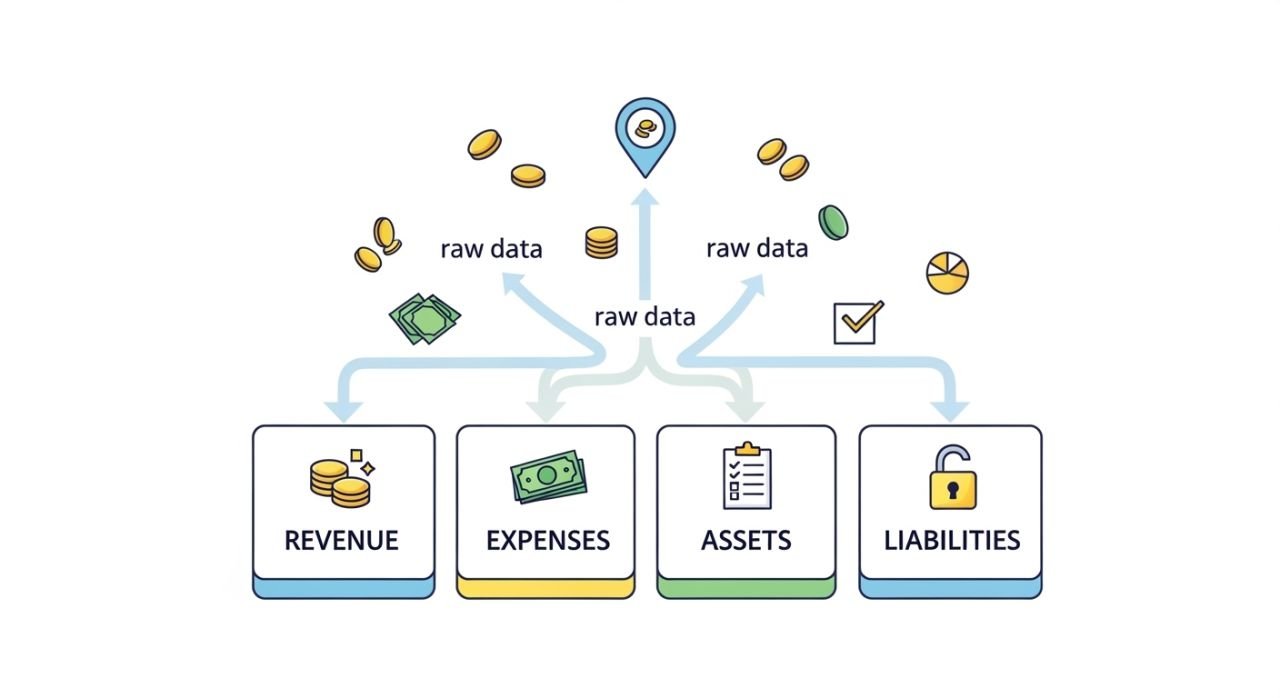
A business financial report is a simple paper that shows how a company handles money. It tells us what the business earns, what it spends, what it owns, and what it owes. In easy words, business financial reporting is the process of creating clear business financial statements so everyone can understand the company’s financial story. It helps track growth, spot problems, and measure success.
Now, let’s look at the financial reporting process. First, a company collects financial data. Next, it records every sale and expense. Then, it prepares reports like the income statement, balance sheet, and cash flow statement. After that, managers review the numbers for accuracy and compliance with financial reporting standards. Finally, they share the reports with the right people.
However, many people confuse financial reporting with financial performance analysis. They are not the same. Financial reporting shows the numbers clearly. In contrast, financial analysis studies those numbers to make smart decisions. Reporting tells the story. Analysis explains the meaning.
There is also a difference between internal financial reporting and external financial reporting. Internal reports help managers plan and control daily work. External reports go to investors, banks, and regulators to ensure financial transparency in business.
So, why does this matter? Because stakeholders need trust. Investors want profit insights. Managers want better planning. Regulators want compliance. Therefore, strong business financial reporting builds confidence, improves decisions, and supports long-term success.
What Are the 3 Main Financial Statements in Business Financial Reporting?
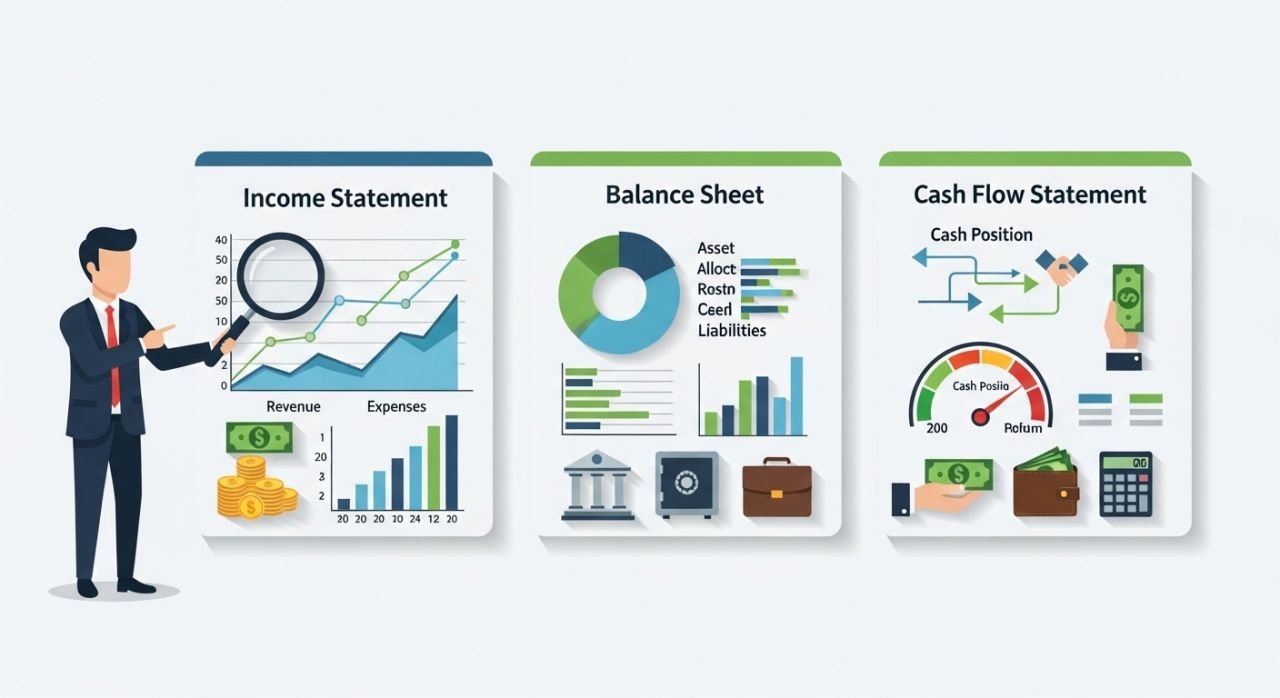
In business financial reporting, three main reports tell the full financial story of a company. Think of them as three important school report cards. Each one shows something different. Together, they help owners understand their financial performance analysis and make smart decisions.
These three core financial statements are:
- Income Statement (Profit & Loss Report)
- Balance Sheet Reporting
- Cash Flow Statement Preparation
Now, let’s understand them in a very simple way.
1. Income Statement (Profit & Loss Report)
The income statement shows how much money a business makes and spends over a period of time. First, it lists revenue, which is the money earned from sales. Next, it shows expenses, which are the costs like rent, salaries, and bills. Finally, it shows net profit, which is the money left after paying all expenses.
If revenue is bigger than expenses, the business earns a profit. If not, it faces a loss.
Through proper income statement analysis, business owners can see if they are growing or struggling. Therefore, this report plays a big role in financial performance tracking. It answers a simple question: Is the business making money?
2. Balance Sheet Reporting
Next comes balance sheet reporting. This report shows what a business owns and owes at a specific time. It has three main parts:
- Assets – What the business owns (cash, equipment, buildings)
- Liabilities – What the business owes (loans, bills)
- Equity – The owner’s share in the business
The balance sheet gives a clear picture of the company’s financial position on a certain date. It helps measure financial strength and stability. In short, it answers this question: Is the business financially strong right now?
3. Cash Flow Statement Preparation
Finally, we have the cash flow statement. This report tracks how cash moves in and out of the business. It has three parts:
- Operating cash flows – Cash from daily business work
- Investing cash flows – Cash used to buy or sell assets
- Financing cash flows – Cash from loans or investors
Proper cash flow statement preparation is very important. Why? Because profit does not always mean cash. A business can show profit but still have no cash to pay bills. That is why cash flow often matters more than profit.
Together, these three statements form the heart of business financial reporting. They create financial transparency, improve planning, and support smarter decision-making.
Read More: Cash Flow vs. Profit: A Simple Guide for Small Business Owners (And Why Both Matter)
What Are the 4 Types of Financial Reports Every Business Should Prepare?
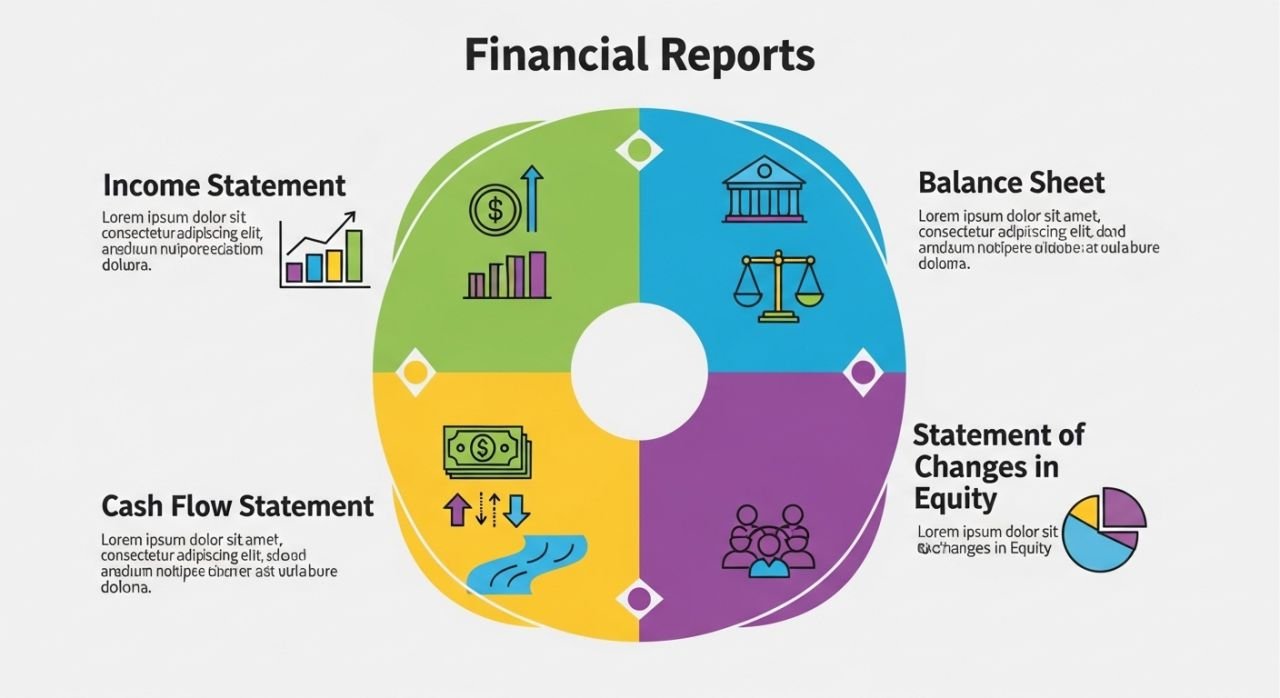
In business financial reporting, companies use more than just the three main statements. To get a complete money picture, every business should prepare four key financial reports. Each report has its own role and helps managers, investors, and regulators understand the company better. Together, they ensure financial transparency in business and follow GAAP or IFRS compliance rules.
The four types of financial reports are:
- Income Statement – This report shows how much money a business earns and spends over time. It tracks revenue, expenses, and net profit. Through income statement analysis, managers can see if the business is making money or facing losses.
- Balance Sheet – The balance sheet shows what a business owns (assets) and owes (liabilities) at a specific date. It also shows equity, which is the owner’s share. Balance sheet reporting helps understand the company’s financial strength and stability at a glance.
- Cash Flow Statement – This report tracks the movement of money in and out of the business. It includes operating, investing, and financing cash flows. Cash flow statement preparation is important because a company can have profit but still run out of cash.
- Statement of Changes in Equity – This report explains changes in the owner’s share over time. It includes new investments, profits kept in the business, and withdrawals. This helps stakeholders see how ownership value grows or changes.
By preparing these four reports, businesses ensure they follow corporate financial reporting standards, maintain accuracy, and support informed decision-making. These reports work together to create a clear picture of financial health, improve planning, and build confidence among investors, management, and regulators.
In short, using all four reports makes business financial reporting complete, reliable, and easy to understand for everyone who cares about the company’s money story.
What Are the 5 Components of Financial Reporting?

In business financial reporting, professional reports follow a clear structure. This structure is called the financial reporting framework, and it ensures every report is accurate, complete, and easy to understand. Five main components make up this framework. Each part plays an important role in showing the business’s financial story clearly.
- Statement of Financial Position – Also called the balance sheet, this report shows what a company owns (assets) and owes (liabilities) at a specific time. It also shows the owner’s equity, which is the value left for the owners after debts are paid.
- Statement of Comprehensive Income – This is the income statement, which records all revenue, expenses, and net profit or loss. It helps managers see the company’s financial performance over a period.
- Statement of Cash Flows – This report tracks cash moving in and out of the business. It includes operating, investing, and financing cash flows. Proper cash flow statement preparation ensures the company never runs short of cash.
- Statement of Changes in Equity – This shows changes in ownership value over time, such as profits kept in the business, new investments, or withdrawals. It gives a clear picture of how the owner’s share grows or shrinks.
- Notes to Financial Statements – These are explanations and details that support the main reports. Notes reveal important information, like accounting methods, debts, or pending issues. They are critical for financial transparency and help stakeholders fully understand the numbers.
By including all five components, businesses follow disclosure requirements and maintain accurate, trustworthy reporting. Together, these components create a complete and clear business financial reporting system. They help managers, investors, and regulators make smarter decisions, develop growth plans, and ensure compliance with GAAP or IFRS standards.
In short, these five components are the backbone of structured financial reporting, giving everyone a clear view of the company’s financial health.
What Are the 5 Steps of Financial Reporting? (Step-by-Step Process)
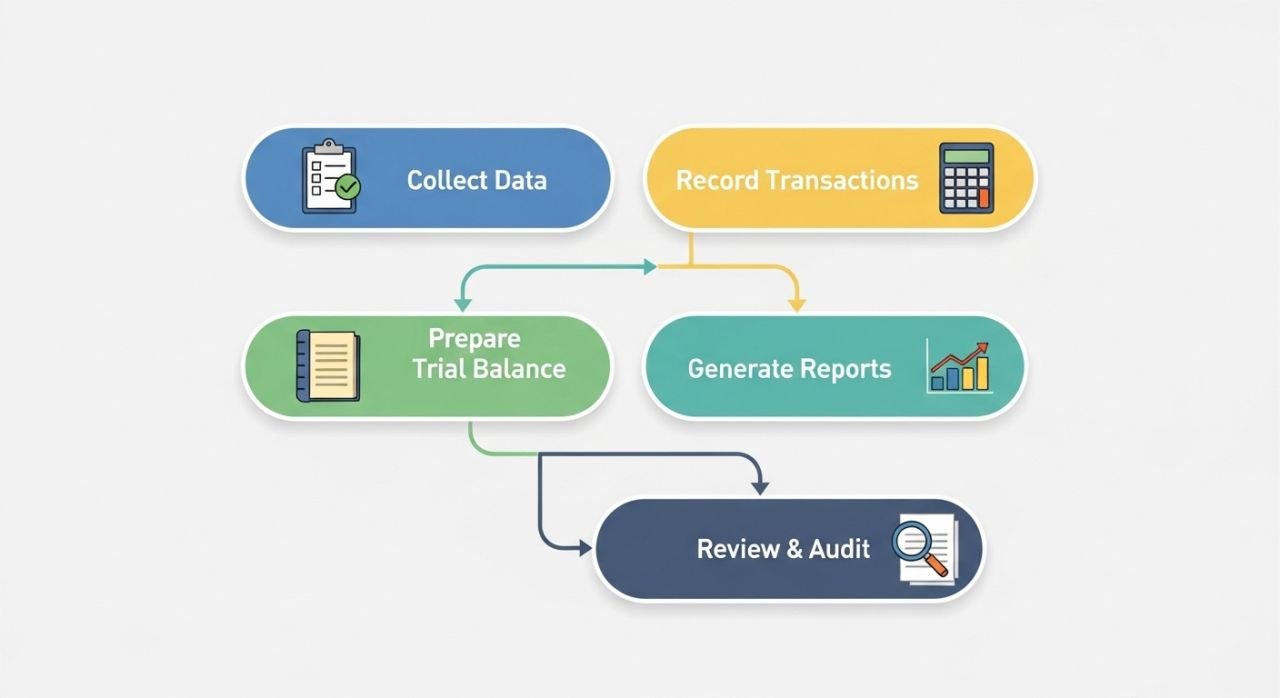
Creating accurate business financial reporting is like following a simple recipe. Each step ensures the reports are correct, clear, and useful for making smart decisions. Let’s break down the 5 steps of financial reporting in an easy way.
Step 1: Collect and Verify Financial Data
First, gather all the financial information. This includes sales, expenses, bills, loans, and investments. Then, check everything carefully. Accuracy matters because even small mistakes can mislead managers or investors.
Step 2: Record Transactions Accurately
Next, record all the data in the accounting system. Every transaction should be documented properly. This step keeps the business organized and ready for financial performance analysis.
Step 3: Prepare Trial Balance
Now, create a trial balance. This report adds up all accounts to make sure debits equal credits. It helps catch errors before generating the main financial statements.
Step 4: Generate Financial Statements
After the trial balance is correct, prepare the main reports: the income statement, balance sheet, cash flow statement, and statement of changes in equity. These reports show the business’s money story clearly to managers, investors, and regulators.
Step 5: Review, Audit, and Finalize Reports
Finally, review all reports carefully. Sometimes an internal or external audit is done to ensure compliance with GAAP or IFRS standards. Once verified, the reports are finalized and shared with stakeholders.
Following these 5 steps ensures business financial reporting is accurate, transparent, and reliable. It also connects to financial reporting best practices, helping businesses plan, comply with regulations, and make smart growth decisions.
What Are the Five Types of Business Reports? (Financial vs Non-Financial)
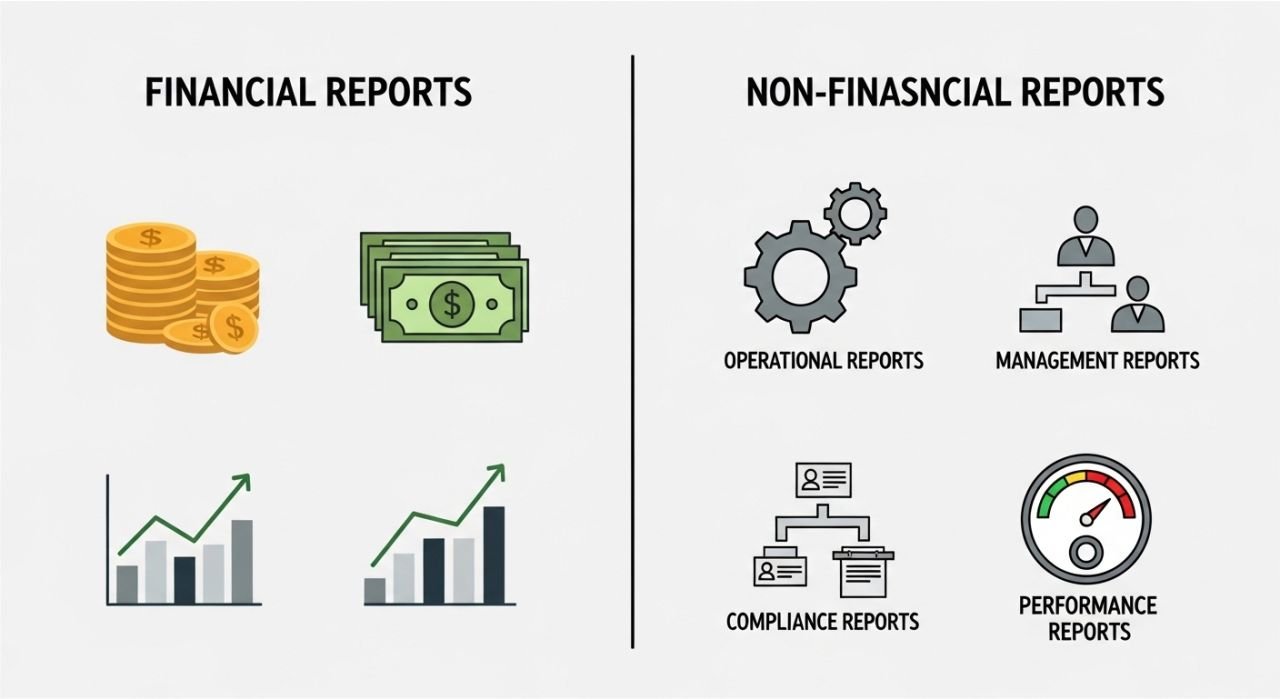
In business financial reporting, not all reports are the same. Companies prepare different types of reports to track money, performance, and operations. These reports help managers, investors, and regulators make smart decisions. There are five main types of business reports:
- Financial Reports – These include the income statement, balance sheet, and cash flow statement. They show how much money a business earns, spends, and keeps. Financial reports are part of corporate financial reporting and ensure financial transparency.
- Operational Reports – These reports focus on daily activities, like production numbers, inventory, or sales performance. They help managers see if the business is running smoothly.
- Management Reports – These give insights for decision-making and planning. They often summarize financial and operational data. Unlike financial reports, management reports focus on strategy and improvement. This is the key difference between financial reporting and management reporting.
- Compliance Reports – These reports ensure the business follows laws, rules, and accounting standards like GAAP or IFRS. They prevent penalties and keep the company legally safe.
- Analytical or Performance Reports – These reports evaluate how well the business is doing. They use charts, ratios, and comparisons to spot trends, strengths, and weaknesses.
Together, these reports give a complete picture of the business. They are crucial for strategic planning and budgeting. Managers can make smarter choices, predict problems, and improve growth.
In short, using all five types ensures that a business doesn’t just track money—it also measures performance, stays compliant, and plans for the future. Strong business financial reporting, combined with these reports, builds confidence for owners, investors, and everyone who depends on the company’s success.
Why Business Financial Reporting Is Crucial for Growth and Decision-Making

Business financial reporting is more than just numbers on paper. It is a powerful tool that helps a company grow and make smart decisions. Clear and accurate financial reports give managers, owners, and investors a real view of how the business is doing.
First, financial reporting plays a key role in business decision-making. When leaders can see revenues, expenses, and cash flow, they make better choices. For example, they know when to invest in new projects or cut costs.
Next, it helps with budgeting and forecasting. Businesses can plan for the future, predict challenges, and set realistic goals. Accurate reports make sure these plans are based on real data, not guesses.
Strong financial reporting also improves investor confidence. Investors trust businesses that show clear, transparent numbers. This can attract new funding and support long-term growth.
Moreover, regulatory compliance is easier with proper reporting. Following GAAP or IFRS standards avoids fines and legal trouble. Companies stay safe while building a trustworthy reputation.
Another benefit is that it reduces financial risk. By spotting errors, hidden debts, or cash flow problems early, businesses can fix issues before they become serious.
In short, accurate business financial reporting supports growth by giving a clear picture of money, performance, and stability. It ensures smart decisions, stronger planning, and better investor trust.
When companies focus on precise financial reporting, they not only manage money well but also prepare for the future. Ultimately, it turns numbers into insights that drive success, stability, and long-term growth.
Tip: Always use structured financial statements, regular reviews, and proper analysis to get the full benefits of business financial reporting for growth and decision-making.
Common Mistakes in Business Financial Reporting (And How to Avoid Them)
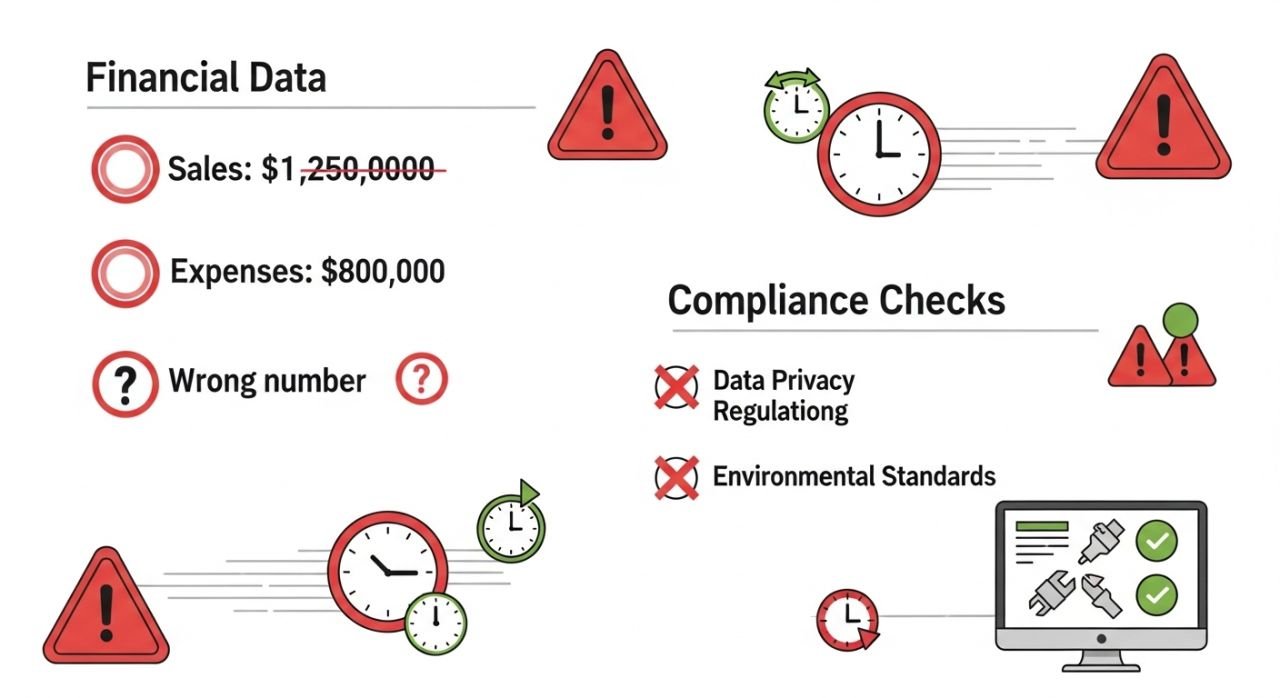
Even smart businesses can make mistakes in business financial reporting. These mistakes can confuse managers, mislead investors, and even cause legal problems. The good news is that most errors are easy to avoid if you know what to watch for.
1. Inaccurate Data Entry – Wrong numbers can ruin a report. Always double-check transactions and totals. Use checklists and simple accounting tools to reduce errors.
2. Ignoring Compliance Standards (GAAP / IFRS) – Reports must follow rules like GAAP or IFRS. Ignoring them can cause penalties and mistrust. Solution: Stay updated on accounting standards and review reports before sharing.
3. Poor Documentation – Missing receipts or invoices make reports incomplete. Always keep organized records. Digital copies and cloud storage help maintain clear documentation.
4. Delayed Reporting – Late reports slow decisions and planning. To avoid delays, set a regular schedule for preparing financial statements. Automation tools can help speed up the process.
5. Lack of Financial Reporting Software – Manual calculations take time and increase mistakes. Using financial reporting software ensures accurate reports, faster processing, and easier analysis.
Best Practices:
- Always verify data before generating reports.
- Follow financial reporting standards carefully.
- Keep all receipts, invoices, and supporting documents.
- Prepare reports regularly and on time.
- Use accounting or reporting software for accuracy and efficiency.
By avoiding these mistakes, businesses can improve financial transparency, support better decision-making, and build trust with investors and regulators. Strong business financial reporting ensures that numbers are accurate, easy to understand, and useful for growth.
In short, careful reporting and smart tools make financial reports reliable, clear, and effective for every stakeholder.
Tools and Software for Modern Business Financial Reporting

Today, business financial reporting is easier and faster thanks to modern tools and software. Instead of writing numbers by hand, companies can use digital solutions to prepare financial statements, track expenses, and analyze performance.
Financial reporting software solutions help businesses organize all their financial data in one place. Popular tools can automatically generate income statements, balance sheets, cash flow statements, and other reports. This saves time and reduces mistakes.
One big advantage is automation in accounting and financial reporting. Software can record transactions, calculate totals, and update reports instantly. This means managers get real-time insights without waiting for manual work. Automation also ensures that calculations follow GAAP or IFRS standards, keeping reports compliant.
Using digital tools improves financial reporting accuracy. They minimize human errors, keep all data consistent, and store records safely in the cloud. Many tools also provide charts and dashboards, making it easier to see trends and performance at a glance.
Moreover, software allows teams to collaborate. Managers, accountants, and auditors can access the same data simultaneously. This makes business financial reporting more transparent and efficient.
In short, modern tools and software turn complicated financial tasks into simple, reliable processes. By using automation and digital solutions, businesses can save time, reduce errors, improve accuracy, and make smarter decisions. Strong financial reporting software is now an essential part of running a successful, transparent, and growth-focused business.
Take Control of Your Future with Smart Business Financial Reporting
Now you understand why business financial reporting truly matters. First, we learned the simple definition. It means creating clear business financial statements to track money and measure success. Then, we explored the 3 main financial statements — the income statement, balance sheet, and cash flow statement. After that, we covered the 4 types of financial reports businesses prepare. We also explained the 5 components of financial reporting, which include structured disclosures and proper presentation. Next, we broke down the 5 steps of financial reporting, from collecting data to reviewing reports. Finally, we looked at the 5 business report categories, including financial, operational, and management reporting.
All these parts work together like pieces of a puzzle. When they fit well, they create financial transparency in business. Because of this, leaders make smarter choices. They improve financial performance analysis. They follow financial reporting standards. They avoid costly mistakes. Most importantly, structured reporting builds trust and long-term stability.
Strong reporting is not just about numbers. It supports better planning, stronger compliance, and steady growth. In other words, it gives your business a clear map for the future.
👉 Want to improve your business financial reporting system?
Start today. Review your current financial statements. Look for gaps in accuracy, compliance, or clarity.
If you are serious about optimizing your financial reporting process, consider using structured reporting practices or modern financial reporting software. When you take control of your numbers, you take control of your growth.