

In today’s fast-moving digital world, having a strong B2B social media strategy is no longer optional—it’s your competitive advantage. Social media has completely transformed modern B2B marketing, giving businesses the ability to reach the right decision-makers, build trust, and generate high-quality leads faster than ever before. Simply posting content won’t cut it anymore. You need a clear, actionable plan that aligns with your business goals and resonates with your audience.
A well-crafted B2B social media strategy can boost your brand visibility, establish credibility, and position your company as a thought leader in your industry. Platforms like LinkedIn, X (Twitter), and YouTube are powerful tools when used strategically. From social selling techniques for B2B to using video marketing for B2B brands, the right approach ensures your content reaches the people who matter most.
In this guide, we’ll walk you through practical, proven, and easy-to-apply strategies that help businesses grow online. You’ll discover how to create a B2B content strategy, leverage employee advocacy strategies, track performance with social media analytics tools, and even amplify your reach with paid social ads. Each tactic is designed to increase engagement, strengthen your brand authority, and drive real results.
By the end, you’ll have a clear roadmap to grow your brand awareness online, improve lead generation, and stand out from competitors in B2B social media. Whether you’re just starting or looking to refine your current approach, this guide will equip you with the insights and tools to make your social channels a powerful engine for visibility and growth.
- What Makes a Successful B2B Social Media Strategy in 2025?
- Crafting a High-Impact B2B Social Media Content Plan
- Leveraging LinkedIn for a Powerful B2B Social Media Strategy
- Creating Thought Leadership That Positions Your Brand as an Industry Authority
- Boosting B2B Brand Visibility with Video and Micro-Content
- Using Data, Analytics & Social Listening to Improve Your B2B Social Media Strategy
- Paid Social Ads: How to Amplify Your B2B Social Media Strategy
- Building a Consistent Brand Voice Across All B2B Social Platforms
- Case Studies: Real B2B Brands Winning with Smart Social Media Strategies
- Take Action: Turn Your B2B Social Media Strategy into Real Results
What Makes a Successful B2B Social Media Strategy in 2025?
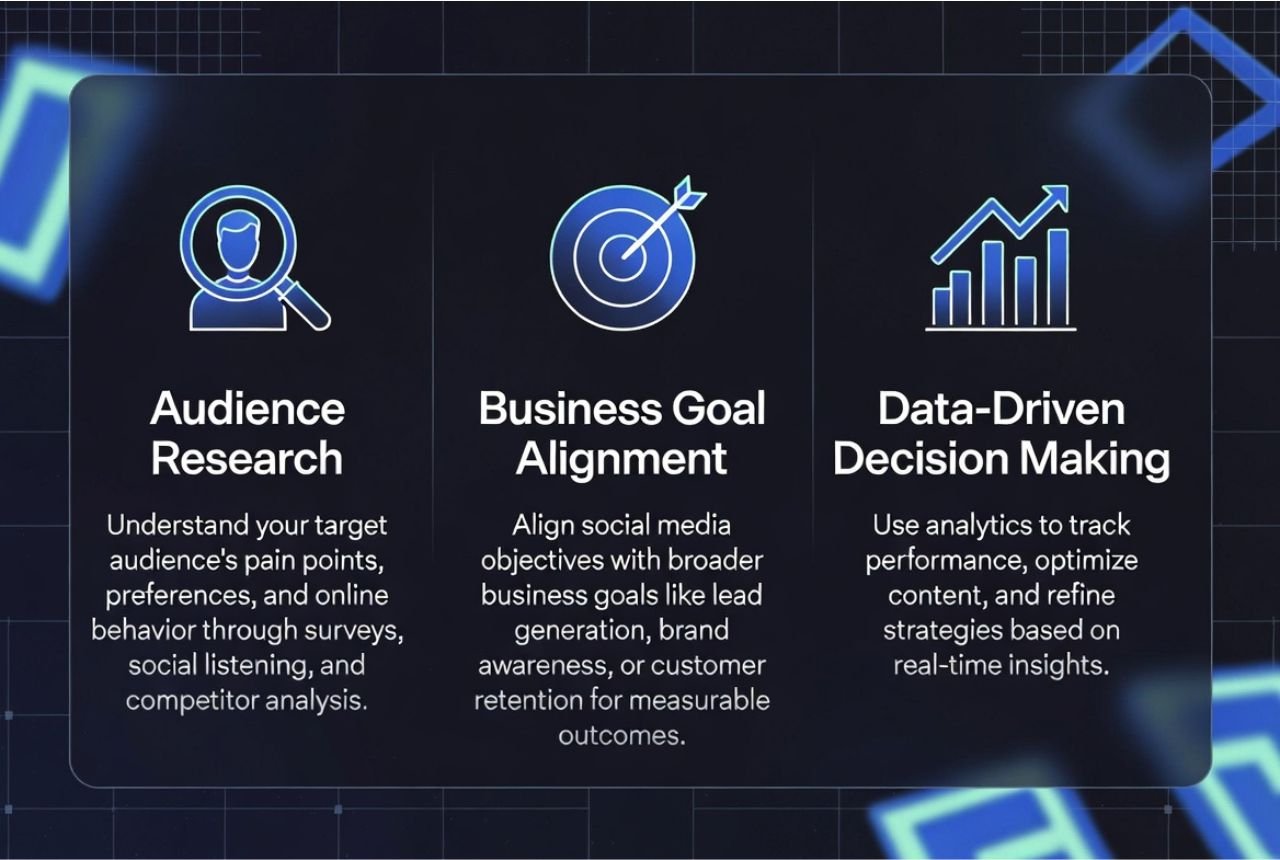
A successful B2B social media strategy starts with understanding your audience. Without knowing who you’re talking to, even the best content can go unnoticed. Conducting audience research helps you uncover buyer intent, identify key decision-makers, and understand what motivates influencers in your industry. This insight ensures every post, video, or article aligns with your B2B marketing goals.
Next, your social strategy must be closely aligned with business objectives. Whether you aim to boost brand awareness, generate leads, or strengthen customer relationships, your B2B content strategy should directly support these goals. Clear alignment keeps your campaigns focused and measurable, avoiding wasted effort on content that doesn’t drive results.
Data-driven decision-making is another cornerstone. Using social insights and analytics, you can track what works, refine your approach, and make informed choices about posting times, content types, and platform focus. In B2B marketing, every decision backed by data leads to better engagement and higher-quality leads.
Understanding B2B buyer behavior on social media is equally important. Unlike B2C, B2B purchases often involve a longer sales cycle and multiple stakeholders. Decision-makers and influencers may have different priorities, so your content must convince and educate. Thought leadership articles, case studies, and industry insights are highly effective at building trust and authority.
By combining audience research, goal alignment, and data-driven insights, your B2B social media strategy can effectively capture attention, nurture prospects, and drive measurable growth in 2025 and beyond.
Crafting a High-Impact B2B Social Media Content Plan
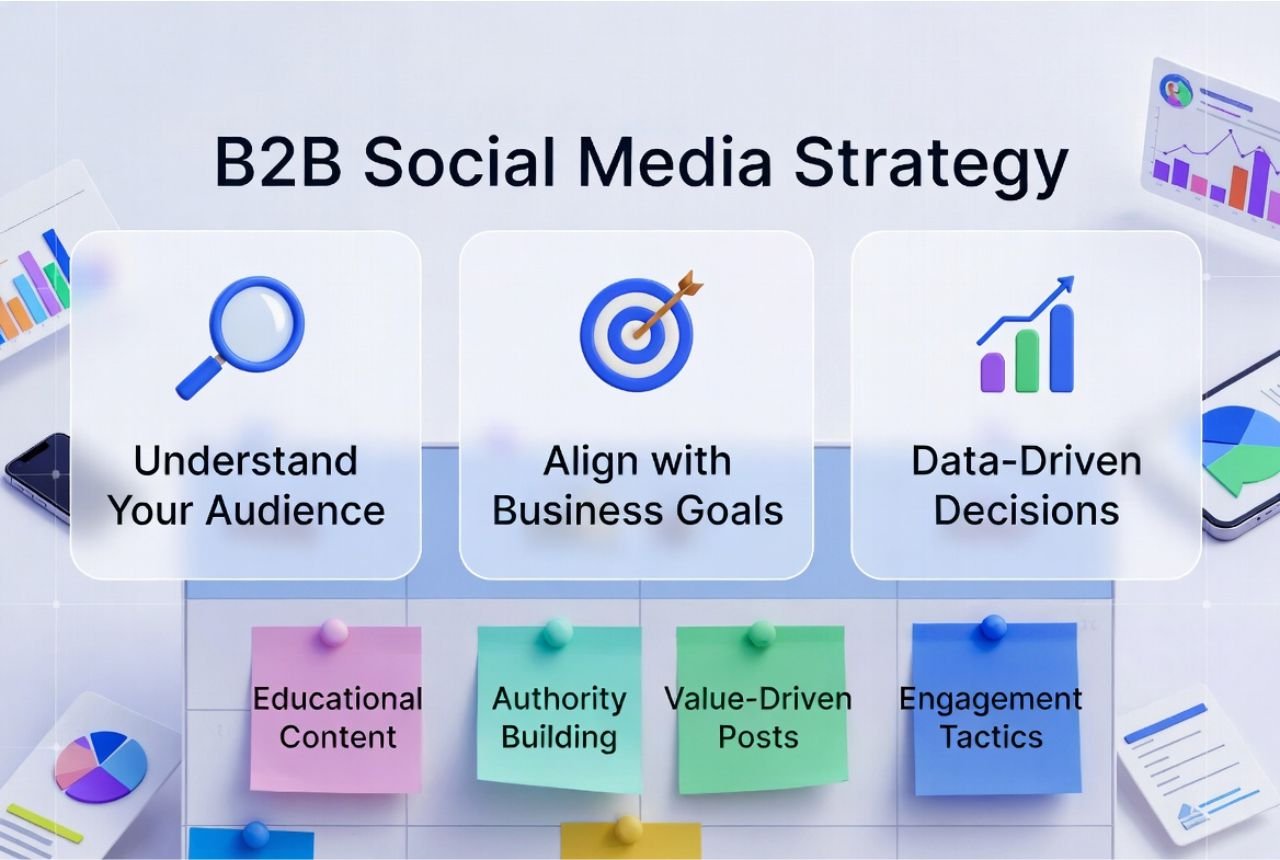
Creating a high-impact B2B social media strategy starts with a well-structured content plan. Not all content works the same in B2B marketing. To boost brand visibility, focus on value-driven, educational, and authority-building content. These types of posts help your audience learn, trust, and engage with your brand. Using clear content pillars ensures consistency and relevance across all your social channels.
Long-form content, like LinkedIn articles, allows you to dive deep into industry topics and showcase expertise. These posts position your brand as a thought leader and attract decision-makers. Meanwhile, short educational videos are perfect for quick tips, demos, or industry insights. They capture attention quickly and encourage sharing, making your brand more visible.
Thought-leadership posts are another essential format. They highlight your company’s perspective on trends, challenges, and solutions, helping you stand out from competitors. Additionally, case studies and client success stories provide social proof. They show real results and build credibility, which is crucial in B2B marketing.
By combining these formats—LinkedIn articles, short videos, thought-leadership posts, and case studies—you can create a B2B social media strategy that is not only engaging but also drives meaningful results. Remember, each piece of content should deliver value and reflect your brand’s authority. Consistency in posting and aligning content with business goals ensures that your strategy captures attention, educates your audience, and boosts your brand visibility online.
Leveraging LinkedIn for a Powerful B2B Social Media Strategy
LinkedIn dominates in B2B marketing because it connects decision-makers, professionals, and industry leaders in one platform. By using LinkedIn marketing effectively, brands can boost B2B networking, showcase thought leadership, and generate high-quality leads. With the right strategy, your B2B social media strategy can increase visibility, build trust, and position your brand as an authority in your industry.
Profile Optimization for Maximum Reach
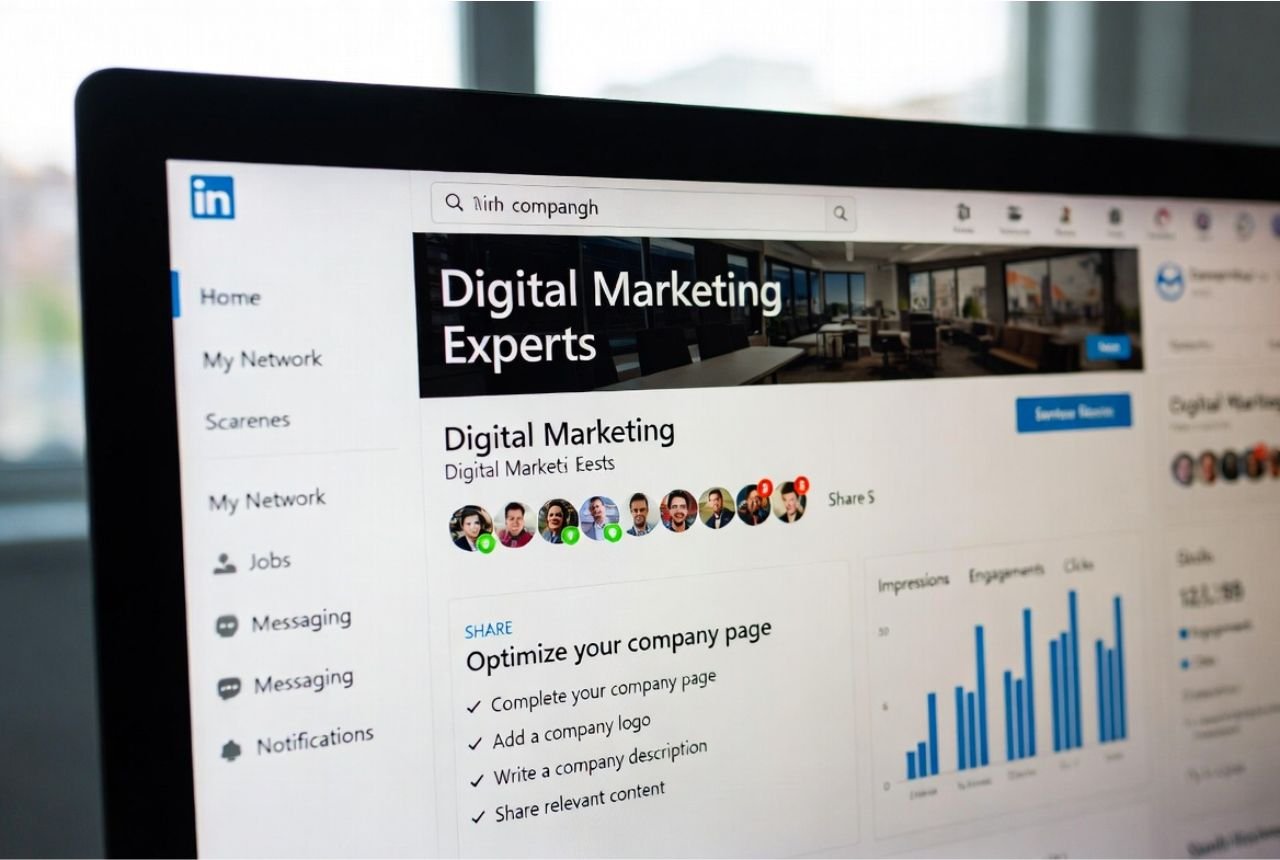
A strong B2B social media strategy starts with a fully optimized company profile. Your company page is often the first impression prospects have of your brand. To maximize reach, it should include a clear logo, concise description, website link, and branded visuals. Make sure your brand messaging is consistent, professional, and highlights what makes your business unique.
Next, focus on optimizing employee advocacy. Encourage your team to share company content and engage with posts. When employees actively participate, your reach multiplies, and your brand appears more authentic and trustworthy. Employees can also help amplify thought leadership posts, case studies, and educational content, boosting your overall visibility.
Regularly update your company page to reflect new offerings, achievements, or campaigns. Add relevant keywords to your description and specialties to make your page more discoverable in search results. Don’t forget to include call-to-actions like “Follow us” or “Visit our website” to guide visitors toward engagement.
By combining a well-optimized company page with active employee advocacy, your B2B social media strategy can reach more decision-makers and attract higher-quality leads. Small steps like consistent branding, clear messaging, and employee participation make a big impact on engagement and visibility.
Remember, your profile is more than just a page—it’s a powerful tool to showcase your expertise and grow your B2B brand online.
Posting Strategy for Higher Engagement
A powerful B2B social media strategy doesn’t stop at content creation. Knowing when and how to post is key to driving higher engagement. Best posting times vary by platform, but generally, mornings and early afternoons on weekdays work well for B2B audiences. Posting consistently during these windows ensures your content reaches the right decision-makers when they are most active.
Next, focus on what content performs best. Educational posts, thought-leadership articles, case studies, and short videos tend to get the most attention. Content that delivers value and addresses audience pain points encourages likes, shares, and comments, boosting your visibility. Remember, quality always beats quantity.
Optimizing posts with hashtags and keywords is another way to increase reach. Use industry-specific hashtags to appear in relevant searches, and naturally include targeted B2B keywords in your captions and headlines. This makes your content more discoverable and strengthens your brand presence online.
Finally, analyze post-performance regularly. Track engagement metrics to understand what resonates and adjust your strategy accordingly. By combining the right posting times, high-value content, and smart hashtag and keyword optimization, your B2B social media strategy can attract more followers, generate leads, and boost brand visibility effectively.
Small, consistent efforts in posting strategy can create big results, turning your social channels into a powerful engine for engagement and growth.
Creating Thought Leadership That Positions Your Brand as an Industry Authority

Thought leadership in B2B means sharing insights that build authority, showcase expertise, and earn brand trust. By consistently providing valuable knowledge, your brand can position itself as an industry expert, attract high-quality leads, and strengthen professional relationships. A strong B2B social media strategy focused on thought leadership ensures your content stands out, influences decisions, and reinforces your brand’s credibility.
How to Write Thought-Leadership Posts That Get Shared
A powerful B2B social media strategy includes thought-leadership posts that position your brand as an industry expert. These posts help build trust, authority, and engagement, making your content more likely to get shared by decision-makers and influencers.
To write posts that resonate, follow simple frameworks. POV (point-of-view) posts allow you to share your unique perspective on industry challenges. Readers love content that provides fresh insights and demonstrates expertise. Next, focus on industry trends. Highlight emerging technologies, market shifts, or new strategies that your audience cares about. This keeps your posts timely and relevant.
Another effective approach is the “hot take” insight. Share a bold opinion or actionable tip that sparks discussion. When crafted carefully, these posts encourage comments, shares, and engagement, increasing your brand’s visibility online. Always support your statements with facts, examples, or mini-case studies to make your content credible and value-driven.
Use clear headlines, short paragraphs, and engaging visuals to make your posts easy to read. Incorporate B2B keywords naturally to improve discoverability.
By combining POV posts, industry trends, and hot-take insights, your B2B social media strategy can create thought-leadership content that not only educates your audience but also encourages sharing and discussion. Consistency, relevance, and authenticity are key to standing out as a trusted authority in your industry.
Leveraging Leaders & SMEs for Authentic Leadership Content
A powerful B2B social media strategy becomes even stronger when you involve CEOs, founders, and team leads in your content efforts. These leaders bring authenticity and authority, making your brand more relatable and trustworthy to your audience. By showcasing their expertise, you highlight your company’s thought leadership genuinely.
Start by creating content that features leaders sharing industry insights, success stories, or lessons learned. Short videos, LinkedIn posts, or articles where founders discuss trends and challenges capture attention and build credibility. When team leads contribute their knowledge, you can produce value-driven content that resonates with decision-makers and influencers alike.
Employee involvement also strengthens employee advocacy. When leaders and subject-matter experts share content on their personal profiles, it multiplies reach and engagement. This strategy ensures your brand messaging is consistent and highly visible across networks.
To make this work, plan a content calendar that schedules leader contributions and aligns with campaigns. Guide tone of voice and messaging so posts reflect your brand personality. Encourage storytelling and real-world examples to make content compelling.
By leveraging leaders and SMEs, your B2B social media strategy gains authenticity, authority, and engagement. This approach helps your audience trust your brand, connect with your team, and view your company as a thought leader, ultimately boosting visibility and driving better results online.
Boosting B2B Brand Visibility with Video and Micro-Content

Video is a game-changer in B2B marketing. Using short-form videos, educational clips, and social reels helps brands grab attention, explain complex ideas quickly, and boost engagement. By integrating video and micro-content into your B2B social media strategy, your brand can increase visibility, connect with decision-makers, and stand out in a crowded market.
High-Performing Video Ideas for B2B Brands
A powerful B2B social media strategy isn’t complete without video content. Videos grab attention, explain ideas quickly, and increase brand visibility. The key is creating high-performing videos that engage decision-makers and influencers.
One effective type is quick tutorials. These short videos teach your audience how to solve a problem or use a product. They are simple, practical, and shareable, helping your brand become a go-to resource.
Next, consider industry breakdowns. These videos explain trends, data, or complex concepts in an easy-to-understand way. By showing your expertise, you position your company as a thought leader and build trust.
Founder tips are also highly engaging. When CEOs or team leads share advice, lessons learned, or predictions, your content becomes authentic and authoritative. These clips humanize your brand and encourage audience interaction.
Finally, “behind-the-brand” clips give viewers a peek into company culture, events, or team stories. They make your brand relatable and foster stronger connections with your audience.
To maximize reach, keep videos short, visually appealing, and aligned with your B2B marketing goals. Add captions, engaging headlines, and relevant hashtags to improve discoverability.
By combining quick tutorials, industry breakdowns, founder tips, and behind-the-scenes clips, your B2B social media strategy can boost engagement, increase brand visibility, and strengthen authority in your industry. Regularly publishing high-value videos ensures your brand stays top-of-mind and builds a loyal professional audience online.
Repurposing Long-Form Content into Viral Micro-Content
A powerful B2B social media strategy doesn’t stop at creating long-form content like blogs, webinars, or whitepapers. To maximize reach and engagement, you can repurpose long-form content into micro-content that is easy to consume and share.
Start with clip slicing strategies. Break down webinars, interviews, or presentations into short, punchy video clips. Focus on key insights, actionable tips, or striking statistics. These bite-sized pieces are perfect for platforms like LinkedIn, X (Twitter), or Instagram, where quick, informative content gets more attention.
Next, pay attention to caption and hook optimization. Each clip should start with a compelling hook that grabs the audience’s attention within seconds. Use clear, concise captions that summarize the value and encourage viewers to click, comment, or share. Hashtags and relevant B2B keywords further improve discoverability and boost reach.
Repurposing content also saves time and ensures consistency across your channels. You can turn one long article into multiple short posts, carousels, or video snippets, maintaining your brand voice while increasing content output.
By combining clip slicing, smart hooks, and optimized captions, your B2B social media strategy can turn valuable insights into viral micro-content. This approach not only strengthens brand authority but also keeps your audience engaged, educated, and coming back for more. Regularly repurposing content ensures that your social channels remain active, visible, and impactful, maximizing ROI from every piece of content your team creates.
Using Data, Analytics & Social Listening to Improve Your B2B Social Media Strategy

Tracking KPIs and analyzing performance metrics is essential for a powerful B2B social media strategy. With analytics and social listening tools, you can monitor engagement, understand audience behavior, and spot trends. Using these insights helps your brand optimize content, make data-driven decisions, and improve visibility, ensuring every social post delivers real business results.
Metrics That Matter Most in B2B
A powerful B2B social media strategy is only as good as the results it delivers. To measure success, focus on the metrics that matter most. These numbers show whether your efforts are reaching the right people and driving real business outcomes.
Start with engagement rate. Likes, comments, shares, and clicks indicate how your audience interacts with your content. High engagement means your posts resonate and provide value to decision-makers.
Next, track reach. This tells you how many people see your content and helps assess your brand visibility. The wider your reach, the higher the chance of attracting potential leads and expanding your network.
Lead quality is another key metric. Not all leads are equal. Focus on leads that match your buyer personas and have a higher likelihood of converting. Quality leads save time and increase ROI on your social campaigns.
Finally, monitor conversion indicators. Track actions like form submissions, demo requests, or newsletter sign-ups. These metrics show if your content moves prospects through the B2B marketing funnel toward sales.
By combining engagement rate, reach, lead quality, and conversion metrics, your B2B social media strategy becomes data-driven and effective. Regularly analyzing these numbers allows you to optimize campaigns, adjust content, and make smarter decisions.
Focusing on the right metrics ensures that every post not only reaches your audience but also drives meaningful results, helping your brand stand out, generate leads, and achieve growth in today’s competitive B2B landscape.
Tools to Track and Optimize Your Strategy
A powerful B2B social media strategy becomes even stronger when you use the right tools to track and optimize your performance. These tools help you understand what works, spot opportunities, and improve engagement across platforms.
Sprout Social is a top choice for B2B marketers. It provides detailed analytics, scheduling, and reporting, helping you measure engagement, track reach, and monitor audience behavior. With Sprout Social, you can make data-driven decisions that improve your content strategy.
Hootsuite is another popular tool. It allows you to manage multiple social accounts, schedule posts in advance, and track campaign performance. By monitoring trends and interactions, Hootsuite ensures your B2B social media strategy stays consistent and effective.
For LinkedIn-focused campaigns, LinkedIn analytics is essential. It shows which posts resonate with decision-makers, which industries engage most, and how your audience grows over time. These insights help you refine content and improve lead generation efforts.
Finally, brand monitoring tools track mentions, hashtags, and conversations about your company. They help identify social sentiment, competitors’ strategies, and trending topics, so your brand remains relevant and visible in the B2B space.
By combining Sprout Social, Hootsuite, LinkedIn analytics, and brand monitoring tools, your B2B social media strategy becomes more efficient and results-driven. Using these tools allows you to optimize content, boost engagement, and increase brand visibility, ensuring every campaign delivers measurable impact and helps your business grow online.
Paid Social Ads: How to Amplify Your B2B Social Media Strategy

Paid social ads are essential for boosting visibility and generating leads in B2B marketing. Using targeted ads, lead gen ads, and social PPC helps your brand reach the right audience quickly. By integrating paid campaigns into your B2B social media strategy, you can maximize reach, drive conversions, and accelerate growth, ensuring every ad delivers measurable business results.
Best Platforms for B2B Paid Social
A powerful B2B social media strategy isn’t complete without paid social campaigns. Paid ads help you reach the right audience faster and boost brand visibility. Choosing the right platform is key to getting results.
LinkedIn Ads are perfect for B2B marketing. They target decision-makers, industries, and job titles, making it easier to reach prospects who matter most. Sponsored content, InMail campaigns, and carousel ads help build authority and drive high-quality leads.
Meta (Facebook & Instagram) is great for retargeting. You can show your ads to people who have already visited your website or engaged with your content. This keeps your brand top-of-mind and increases the chances of conversion. Meta’s advanced targeting tools help refine your B2B social media strategy for maximum impact.
YouTube Ads offer a visual way to engage prospects. Short videos, tutorials, or case studies can be promoted to audiences searching for industry insights or solutions. Video ads help educate your audience while boosting brand recognition and trust.
When using paid platforms, remember to align ad content with your B2B marketing goals. Track engagement, clicks, and conversions to see what works best. Combining LinkedIn Ads, Meta retargeting, and YouTube Ads ensures your paid social strategy is well-rounded and effective.
By choosing the right platforms and optimizing campaigns, your B2B social media strategy can generate high-quality leads, increase engagement, and amplify your brand visibility across the web.
Creating High-Conversion Ad Creatives
A powerful B2B social media strategy isn’t complete without high-converting ad creatives. The right ad captures attention, communicates value, and encourages action. Every element of your creative matters—from visuals to messaging.
Start with a strong hook. Your opening line or image should immediately grab attention. It could be a surprising fact, question, or bold statement that resonates with decision-makers. A compelling hook ensures your ad stops the scroll and engages your target audience.
Next, present a clear value proposition. Explain exactly how your product or service solves a problem or delivers results. Keep it simple and benefit-focused. Prospects should instantly understand what they gain by engaging with your brand.
Finally, include high-trust CTAs (call-to-actions). Use phrases like “Request a demo,” “Learn from experts,” or “See success stories” to guide users toward the next step. A strong CTA increases clicks, leads, and ultimately conversions for your B2B social media strategy.
Visuals also play a key role. Use professional graphics, branded colors, and readable fonts to make your ads stand out. Test different formats—carousel ads, videos, or single-image posts—to see what drives the best results.
By combining strong hooks, clear value propositions, and high-trust CTAs, your ad creatives become powerful tools. They not only boost engagement and leads but also reinforce your brand visibility and authority in the B2B space. Regularly testing and refining creatives ensures your paid campaigns deliver maximum ROI.
Building a Consistent Brand Voice Across All B2B Social Platforms

A strong B2B social media strategy isn’t just about posting regularly—it’s about having a consistent brand voice that reflects your brand personality and tone of voice. Consistency helps your audience recognize and trust your brand across all platforms. When your messaging feels unified, it strengthens credibility, improves engagement, and ensures your brand messaging is clear and memorable.
To maintain consistency, it’s essential to implement social media guidelines for your team. These guidelines define how your brand speaks, what style to use, and how to respond to comments or inquiries. They serve as a roadmap for everyone creating content, reducing confusion, and ensuring your B2B content strategy remains cohesive.
Approval workflows are another key tool. By having a clear process for reviewing and approving posts, you can catch inconsistencies before they go live. This ensures all content aligns with your brand voice and messaging standards.
Using a content calendar also helps. It keeps your posting schedule organized, aligns campaigns with business goals, and ensures that every team member knows what to share and when. With a calendar, your team can coordinate campaigns, plan for seasonal trends, and maintain a consistent presence across platforms like LinkedIn, X (Twitter), and YouTube.
By combining social media guidelines, approval workflows, and a content calendar, your B2B social media strategy will not only engage your audience but also build long-term trust and authority. A consistent brand voice ensures that every post reinforces your identity and helps your company stand out in a crowded market.
Case Studies: Real B2B Brands Winning with Smart Social Media Strategies
Seeing real examples of success can make any B2B social media strategy easier to understand and replicate. Let’s look at a few B2B examples that have mastered social media to boost brand visibility and drive results.
HubSpot is a classic success story. Their strategy focuses on educational content, including blogs, LinkedIn articles, and short videos that teach marketing and sales tips. They consistently provide value-driven content that engages decision-makers. By aligning content with B2B marketing goals and analyzing social insights, HubSpot maintains a strong brand voice and keeps its audience coming back.
Another great example is Salesforce. They use case studies and client success stories to show real-world results. This approach builds trust and authority, demonstrating how their solutions solve business problems. They mix long-form content with micro-content, like quick LinkedIn posts and short videos, to reach a wider audience and keep engagement high.
Finally, IBM uses thought-leadership posts and educational videos to share industry insights. They focus on topics that matter to decision-makers, showing expertise and positioning themselves as a reliable partner. Their success comes from consistency, value-driven content, and data-driven decisions, making their social media presence powerful and memorable.
These growth case studies reveal that a smart B2B social media strategy combines educational content, thought leadership, and measurable results. By studying these success stories, you can apply similar tactics to boost your brand visibility online, engage your audience, and generate meaningful leads.
Take Action: Turn Your B2B Social Media Strategy into Real Results
As we wrap up, remember that a powerful B2B social media strategy is more than posting content—it’s about planning, consistency, and using data-driven decisions to guide every move. From creating thought leadership content and leveraging LinkedIn marketing for B2B to tracking performance with social media analytics tools, every step matters. The key takeaways are simple: know your audience, craft valuable content, maintain a consistent brand voice, and always measure results to improve your strategy.
Consistency is what separates brands that simply exist on social media from those that truly skyrocket their visibility. By implementing these strategies, you can build trust, engage decision-makers, and generate high-quality leads that grow your business. Remember, even small, smart changes in your B2B content strategy can lead to big results over time.
Now is the time to put what you’ve learned into action. Start applying these proven strategies today and watch your brand awareness online and B2B engagement grow steadily. Don’t wait—your competitors are already optimizing their social presence.
For even more insights, tips, and actionable techniques, check out our special guide: “Social Media Secrets: 7 Proven Strategies to Skyrocket Your Online Presence”. It’s packed with expert advice to take your B2B social media strategy to the next level and help you stand out from competitors in B2B social media.
Take control of your social channels today, apply these strategies, and transform your online presence into a powerful engine for growth, visibility, and leads.